



The results of the study showed that this system of tasks helps to learn not only the ways of activity and experience of creative activity, but also the emotional and value component of social experience.
...
At the same time, the acquisition of the second and third components of social experience when using the system of didactic chess tasks involves a mandatory reliance on emotional experience - the fourth, emotional and value component of social experience.
...
The ascertaining experiment helped to determine the initial stages of the development of the ability to “operate mentally” in the control and experimental groups. For this purpose, the traditional diagnostic technique of Y.A. Ponomarev “Knight and Pawns” was used.
...
To test the hypothesis of the study, at the beginning and at the end of the school year, children from the experimental groups were offered tasks on unfamiliar material.
...
The results obtained indicate that the transfer of the ability to “operate mentally” from known material to new material has been realized.
...
The development of the ability to “operate mentally” is a complex and long process, and it should begin in preschool age with the help of the leading game activity at this age.
...
One of the means that contribute to the development of children's ability to “operate mentally” is chess, or rather, the use of chess material, which also allows to use the developmental potential of many other intellectual games.
...
The optimal organizational form of conducting chess classes for the development of the ability to act in the “mind” - “task” - is determined.
...
The effectiveness of the developed system under the above conditions was tested on experimental groups of children (compared to control groups).
...
The hypothesis of the study was confirmed on unfamiliar material for children. The results obtained indicate that the ability to “operate mentally” was transferred from known material to new material.
...
At the same time, the acquisition of the second and third components of social experience when using the system of didactic chess tasks involves a mandatory reliance on emotional experience - the fourth, emotional and value component of social experience.
...
The ascertaining experiment helped to determine the initial stages of the development of the ability to “operate mentally” in the control and experimental groups. For this purpose, the traditional diagnostic technique of Y.A. Ponomarev “Knight and Pawns” was used.
...
To test the hypothesis of the study, at the beginning and at the end of the school year, children from the experimental groups were offered tasks on unfamiliar material.
...
The results obtained indicate that the transfer of the ability to “operate mentally” from known material to new material has been realized.
...
The development of the ability to “operate mentally” is a complex and long process, and it should begin in preschool age with the help of the leading game activity at this age.
...
One of the means that contribute to the development of children's ability to “operate mentally” is chess, or rather, the use of chess material, which also allows to use the developmental potential of many other intellectual games.
...
The optimal organizational form of conducting chess classes for the development of the ability to act in the “mind” - “task” - is determined.
...
The effectiveness of the developed system under the above conditions was tested on experimental groups of children (compared to control groups).
...
The hypothesis of the study was confirmed on unfamiliar material for children. The results obtained indicate that the ability to “operate mentally” was transferred from known material to new material.
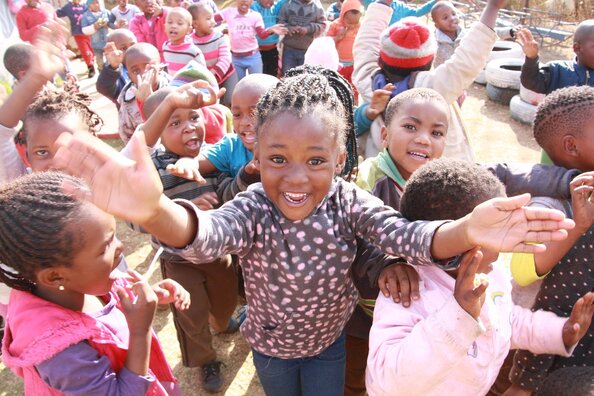
Under the ability to "operate mentally" we will understand a preschool age neoplasm, an integrated characteristic of human consciousness, which is an inseparable unity of imagination, attention, memory and thinking and consists in the ability of an individual to operate in the mental plane with substitutes for real objects (without performing detailed operations with them in space).
...
As it has become clear in recent years, the development of the ability to "operate mentally" and the peculiarities of assimilating social experience are interrelated processes.
...
A preschooler learns social experience primarily through the leading type of activity for this age - play.
...
The success of mastering these learning activities suggests that all children from the first days of school have already developed the ability to "operate mentally" to the necessary extent, but in fact this is not the case.
...
It is proved that the ability to "operate mentally" must be specially “stretched”, and its development is a slow process that involves a long mental education of the child and ends at about twelve years of age.
...
The main attention was paid to didactic games - games whose structural components are: didactic task, game task, game actions, game rules, its content, result and didactic material.
...
Among the favorable conditions for the development of the ability to "operate mentally", researchers distinguish the solution of theoretical problems, modeling, gradual development of the ability to "operate mentally", group work, oral work.
...
As a result, it was concluded that from the content point of view, the “task” form of classes was optimal.
...
Only that social experience can be assimilated by a preschooler that will most affect the sphere of his emotions and feelings.
...
As it has become clear in recent years, the development of the ability to "operate mentally" and the peculiarities of assimilating social experience are interrelated processes.
...
A preschooler learns social experience primarily through the leading type of activity for this age - play.
...
The success of mastering these learning activities suggests that all children from the first days of school have already developed the ability to "operate mentally" to the necessary extent, but in fact this is not the case.
...
It is proved that the ability to "operate mentally" must be specially “stretched”, and its development is a slow process that involves a long mental education of the child and ends at about twelve years of age.
...
The main attention was paid to didactic games - games whose structural components are: didactic task, game task, game actions, game rules, its content, result and didactic material.
...
Among the favorable conditions for the development of the ability to "operate mentally", researchers distinguish the solution of theoretical problems, modeling, gradual development of the ability to "operate mentally", group work, oral work.
...
As a result, it was concluded that from the content point of view, the “task” form of classes was optimal.
...
Only that social experience can be assimilated by a preschooler that will most affect the sphere of his emotions and feelings.
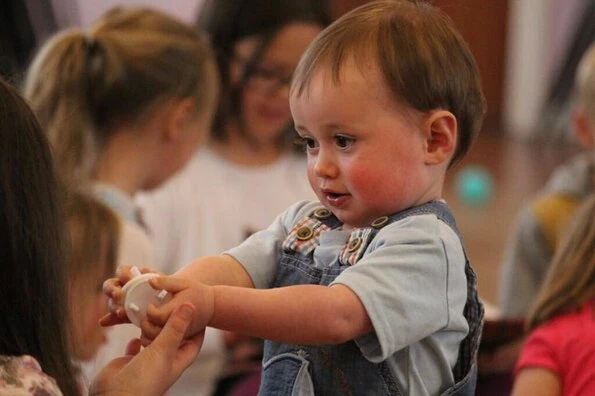
The successful implementation of priority tasks is associated with the transfer of social experience to a new generation, which includes knowledge, ways of doing things, experience of creative activity, and experience of emotional and value-based attitudes towards the world.
...
Research shows that a significant number of children who come to school are characterized by age-related unformed school functions: organization of activity, attention, memory, thinking, and speech.
...
Experts believe that it is necessary not to accelerate the development of preschoolers, but to enrich it, using the leading game activity at this age.
...
At the same time, in recent years, many researchers have noted that preschoolers' play activities are underdeveloped, children play little and are poorly able to obey the rules.
...
One of such important indicators is the ability to "operate mentally", studied by Y.O. Ponomarev.
...
The purpose of his research was to find an answer to the question: does any intellectual ability develop during learning that is not limited to the mere accumulation of knowledge and skills?
...
And the answer was yes, and this is the ability to "operate mentally".
...
This ability was designated as one of the universal characteristics of human consciousness, one of the most important indicators of the overall development of the human psyche, which does not belong to any of the traditionally distinguished mental processes, but is an inseparable unity of imagination, attention, memory and thinking.
...
Chess is one of these tools.
...
In our opinion, chess is of no less value for preschool education, due to the important role it can play in the process of internalization.
...
We are not talking about playing chess as such, where the ability to "operate mentally" is formed spontaneously, but about developing a system of didactic chess tasks designed to develop this ability.
...
At the same time, chess tasks mean tasks using chess material, which makes it possible to use the developmental potential of many other intellectual games.
...
The importance of the problem of purposeful development of the ability to "operate mentally" in preschoolers through the use of chess material and its insufficient development in pedagogical science have determined the relevance of the chosen research topic.
...
Research shows that a significant number of children who come to school are characterized by age-related unformed school functions: organization of activity, attention, memory, thinking, and speech.
...
Experts believe that it is necessary not to accelerate the development of preschoolers, but to enrich it, using the leading game activity at this age.
...
At the same time, in recent years, many researchers have noted that preschoolers' play activities are underdeveloped, children play little and are poorly able to obey the rules.
...
One of such important indicators is the ability to "operate mentally", studied by Y.O. Ponomarev.
...
The purpose of his research was to find an answer to the question: does any intellectual ability develop during learning that is not limited to the mere accumulation of knowledge and skills?
...
And the answer was yes, and this is the ability to "operate mentally".
...
This ability was designated as one of the universal characteristics of human consciousness, one of the most important indicators of the overall development of the human psyche, which does not belong to any of the traditionally distinguished mental processes, but is an inseparable unity of imagination, attention, memory and thinking.
...
Chess is one of these tools.
...
In our opinion, chess is of no less value for preschool education, due to the important role it can play in the process of internalization.
...
We are not talking about playing chess as such, where the ability to "operate mentally" is formed spontaneously, but about developing a system of didactic chess tasks designed to develop this ability.
...
At the same time, chess tasks mean tasks using chess material, which makes it possible to use the developmental potential of many other intellectual games.
...
The importance of the problem of purposeful development of the ability to "operate mentally" in preschoolers through the use of chess material and its insufficient development in pedagogical science have determined the relevance of the chosen research topic.