


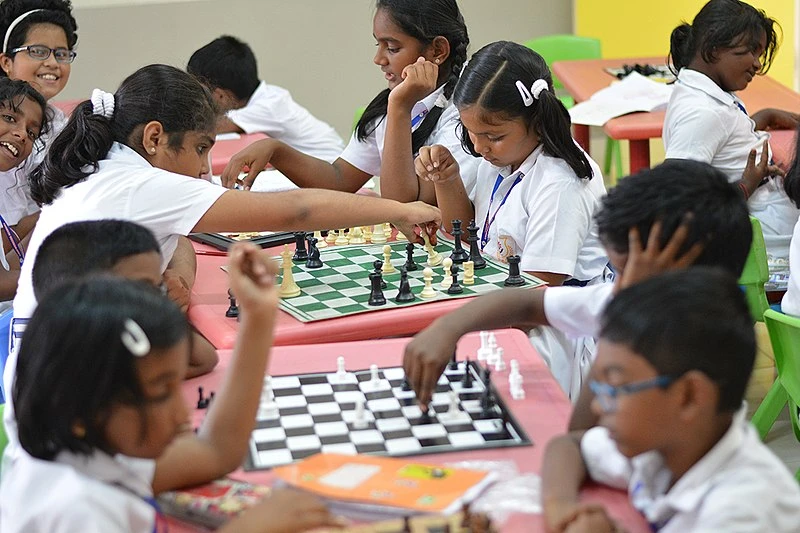
- The most important stages of creative development.
- Individual work of the coach.
- Acquired skills of the student.
- Culture of behavior and morality of a young chess player.
- Acquired skills of the teacher.
- Individual work of the coach.
- Acquired skills of the student.
- Culture of behavior and morality of a young chess player.
- Acquired skills of the teacher.
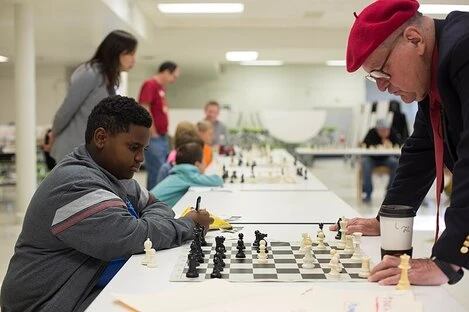
Among the teacher's difficulties is the intellectual passivity of the students and their unwillingness to think. Children often listen attentively to the teacher, carefully performing the part of the work where simple copying is enough.
...
Let the student feel that the teacher believes in his or her strengths, expects effort and responsibility from him or her, and is ready to help.
...
How to study debuts? The first two ... years should be taught chess theory, developing ... their combinational abilities.
...
The main thing at this stage is to develop self-confidence. Many students at this age have mood swings, a "fragile" psyche, and an inability to endure defeat.
...
The main skill of a young chess player, which he must acquire by the end of the third year of study, is a CONSTANT SENSE OF THE LINKS BETWEEN THE FIGURES IN THE GAME.
...
Let the student feel that the teacher believes in his or her strengths, expects effort and responsibility from him or her, and is ready to help.
...
How to study debuts? The first two ... years should be taught chess theory, developing ... their combinational abilities.
...
The main thing at this stage is to develop self-confidence. Many students at this age have mood swings, a "fragile" psyche, and an inability to endure defeat.
...
The main skill of a young chess player, which he must acquire by the end of the third year of study, is a CONSTANT SENSE OF THE LINKS BETWEEN THE FIGURES IN THE GAME.
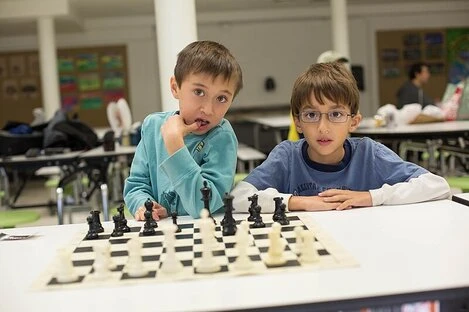
The teacher needs to structure lessons in a way that each class contains a hidden "spark" allowing the student - under certain tension on their part - to independently "uncover" the essence of the newly studied concept.
...
The main thing in this is to instill in the student the desire and ability to "use their brains". In this challenging period for the student, the teacher's approval is an important push when storming the "granite" of chess science.
...
The coach's key task is to help the student experience such an important FEELING OF SUCCESS when the nearest sports goal is achieved, and a specific skill is mastered.
...
...there are many positions when even a significant material advantage is insufficient for victory. They arouse children's curiosity, mixed... with skepticism…
...
I would like to add that the most important thing for an educator is to engage the students, as enthusiasm is the foundation of all successes.
...
The main thing in this is to instill in the student the desire and ability to "use their brains". In this challenging period for the student, the teacher's approval is an important push when storming the "granite" of chess science.
...
The coach's key task is to help the student experience such an important FEELING OF SUCCESS when the nearest sports goal is achieved, and a specific skill is mastered.
...
...there are many positions when even a significant material advantage is insufficient for victory. They arouse children's curiosity, mixed... with skepticism…
...
I would like to add that the most important thing for an educator is to engage the students, as enthusiasm is the foundation of all successes.
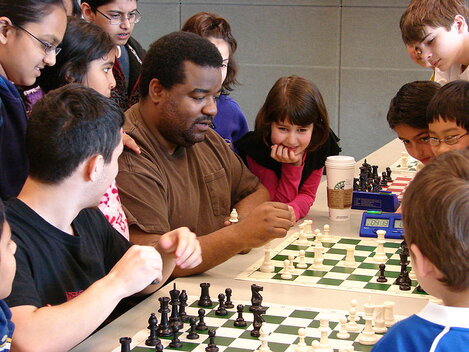
Children respond very well to EXCEPTIONS when, for example, a pawn is stronger than a queen.
...
A very important feature of IMAGINATIVE THINKING is the establishment of unusual, "incredible" combinations of objects and their properties.
...
The goal of a chess game is to checkmate the opponent's king. This is the central theme of this stage of learning.
...
And it is imperative (otherwise everything will be in vain) that each of your students from time to time feel the joy of victory.
...
A very important feature of IMAGINATIVE THINKING is the establishment of unusual, "incredible" combinations of objects and their properties.
...
The goal of a chess game is to checkmate the opponent's king. This is the central theme of this stage of learning.
...
And it is imperative (otherwise everything will be in vain) that each of your students from time to time feel the joy of victory.