


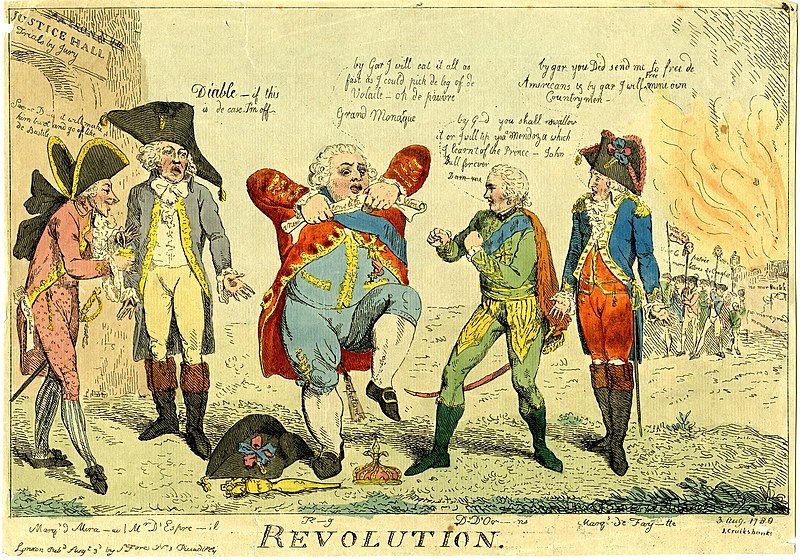
Will the French be allowed to play chess in the future?
The main piece will be the standard-bearer, or better, the flag (le drapeau).
It will not be difficult to give this piece an appropriate appearance; it will replace the former king, will have his move, and everyone around him must protect him.
The main piece will be the standard-bearer, or better, the flag (le drapeau).
It will not be difficult to give this piece an appropriate appearance; it will replace the former king, will have his move, and everyone around him must protect him.
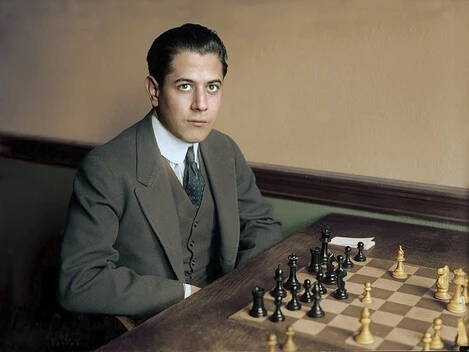
Chess is undoubtedly an art, just like painting or sculpture!
In general, the study of the exact sciences is a good basis for chess creativity.
That's why chess could be compared to an exact science, if it didn't require one more ability from a chess player - a rich imagination.
In general, the study of the exact sciences is a good basis for chess creativity.
That's why chess could be compared to an exact science, if it didn't require one more ability from a chess player - a rich imagination.
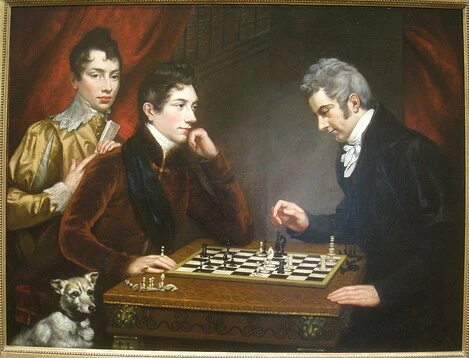
Further, the intermediate operation of calculation - a move in the mind - involves fixing the position resulting from the move with the visual imagination.
It is quite obvious that such a visual fixation of the change made by the move is absolutely necessary so that when thinking about further moves, the figure moving in the mind is already in the right place.
It is quite obvious that such a visual fixation of the change made by the move is absolutely necessary so that when thinking about further moves, the figure moving in the mind is already in the right place.
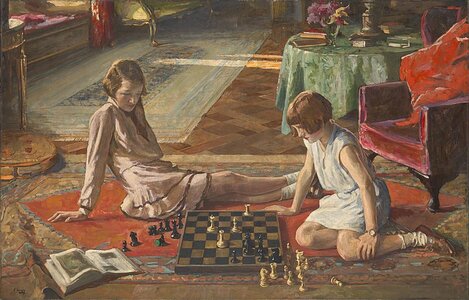
A combination is born in the chess player's head.
Many thoughts strive for realization - correct and erroneous, strong and weak, practical and impractical.
They are born and fight with each other until one of them prevails.
Many thoughts strive for realization - correct and erroneous, strong and weak, practical and impractical.
They are born and fight with each other until one of them prevails.
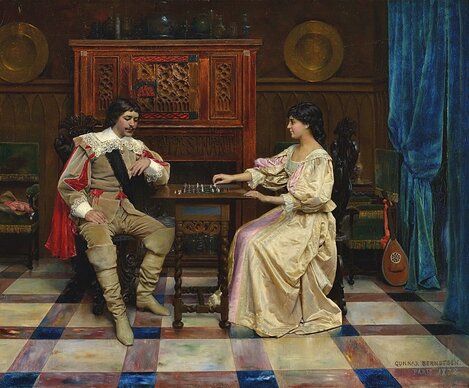
The alphabet of the game is its rules: the goal of the game (checkmate), the turn-taking, the rules of the movement of the pieces, and so on.
All these techniques are consciously learned, but over time, the process of applying them becomes automated.
This manifests itself in the fact that the board and the pieces are perceived unconsciously as spatial, dynamic, and meaningful relationships according to the rules of the game, and this transformation of visual impressions into meaningful relationships occurs with unusual speed, so the intermediate links in the process usually become inaccessible to self-observation.
All these techniques are consciously learned, but over time, the process of applying them becomes automated.
This manifests itself in the fact that the board and the pieces are perceived unconsciously as spatial, dynamic, and meaningful relationships according to the rules of the game, and this transformation of visual impressions into meaningful relationships occurs with unusual speed, so the intermediate links in the process usually become inaccessible to self-observation.
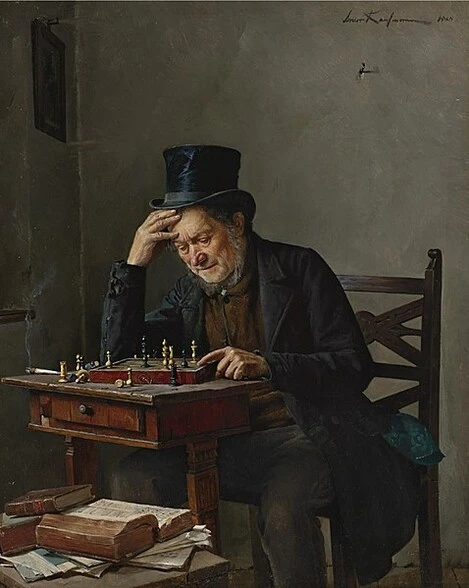
The thinking of a chess player is also characterized by visual perception: it is related to the visual perception of the board, the pieces on the board, and the spatial relationships between them, as well as with visual images created by the imagination during the thought process of moving the pieces.
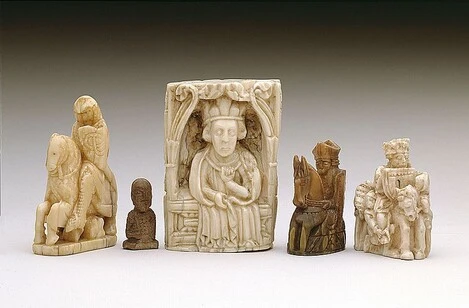
Thus, we come to the conclusion that the Etude is, first of all, not a typical endgame.
The more noticeable its differences from purely theoretical endings, the more prominently it represents its specific genre, the stronger and deeper it is connected with the game, because the more fruitful the influence of the etude on the development of the combination talent of any chess player.
The more noticeable its differences from purely theoretical endings, the more prominently it represents its specific genre, the stronger and deeper it is connected with the game, because the more fruitful the influence of the etude on the development of the combination talent of any chess player.
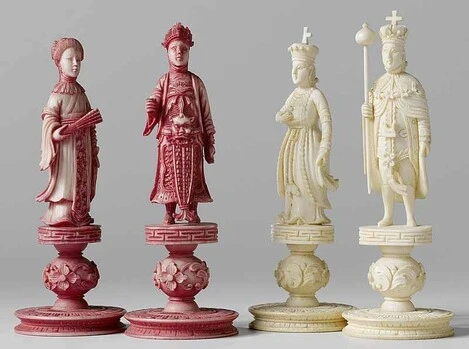
But among the feelings that accompany chess thought, there is one that is undoubtedly the strongest and deepest - the feeling of beauty.
The beauty of a thought, which conceals a victorious force in its beauty, acts on our imagination extremely strongly and evokes a lively reaction.
This feeling triumphs even over sports excitement.
The beauty of a thought, which conceals a victorious force in its beauty, acts on our imagination extremely strongly and evokes a lively reaction.
This feeling triumphs even over sports excitement.
What distinguishes a combination from a maneuver? - Sacrifice.
What is a combination? A combination is a forced option with a sacrifice.
A combination should not be confused with a forced maneuver.
What is the difference between a combination and a forced maneuver?
A forced maneuver is a forced option without a sacrifice.
What is a combination? A combination is a forced option with a sacrifice.
A combination should not be confused with a forced maneuver.
What is the difference between a combination and a forced maneuver?
A forced maneuver is a forced option without a sacrifice.
Recently, various fields of science and technology have begun to introduce technical standards for terms and definitions.
This is due to necessity: ambiguous interpretations of objects and phenomena are sometimes expensive. And in the theory of chess tactics, many things also need to be clarified and formulated more clearly.
This will benefit all chess enthusiasts who want to improve.
This is due to necessity: ambiguous interpretations of objects and phenomena are sometimes expensive. And in the theory of chess tactics, many things also need to be clarified and formulated more clearly.
This will benefit all chess enthusiasts who want to improve.