



I was a third-category chess player when I came up with a fruitful opening idea - the idea of a variation that was to turn the whole of chess theory upside down.
...
It is now called the Latsis attack.
...
All this was already in the game Tarrasch - Marko, Dresden, 1892
...
The theory of the royal gambit is especially full of sound names. Just take the Muzio Gambit alone - what is there not to see here!
...
The Muzio Gambit cannot be played andante, like a Chopin Nocturne; this devilish gambit should be played allegro furioso, like the first movement of a sonata pathetique!
...
Dr. Lasker, who was to foresee my future, to determine my chess destiny, lived in our city at the time.
...
It was then that Lasker was finally convinced that he was looking at a real chess player and asked me if I had any of my own opening developments.
...
Lasker asks me what I think of this position. I answer that Black is in a bad position because he has weakened his queen's side and is behind in development.
...
But I want to give you one little piece of advice. Turn the board around. Look at the position from the other side.
...
Lasker identified the main thing: do I have a purely chess gift? In other words, do I have independent chess thinking?
...
As for the “devil's gambit”, I managed to play the Muzio Gambit in a tournament game only once.
...
It is now called the Latsis attack.
...
All this was already in the game Tarrasch - Marko, Dresden, 1892
...
The theory of the royal gambit is especially full of sound names. Just take the Muzio Gambit alone - what is there not to see here!
...
The Muzio Gambit cannot be played andante, like a Chopin Nocturne; this devilish gambit should be played allegro furioso, like the first movement of a sonata pathetique!
...
Dr. Lasker, who was to foresee my future, to determine my chess destiny, lived in our city at the time.
...
It was then that Lasker was finally convinced that he was looking at a real chess player and asked me if I had any of my own opening developments.
...
Lasker asks me what I think of this position. I answer that Black is in a bad position because he has weakened his queen's side and is behind in development.
...
But I want to give you one little piece of advice. Turn the board around. Look at the position from the other side.
...
Lasker identified the main thing: do I have a purely chess gift? In other words, do I have independent chess thinking?
...
As for the “devil's gambit”, I managed to play the Muzio Gambit in a tournament game only once.
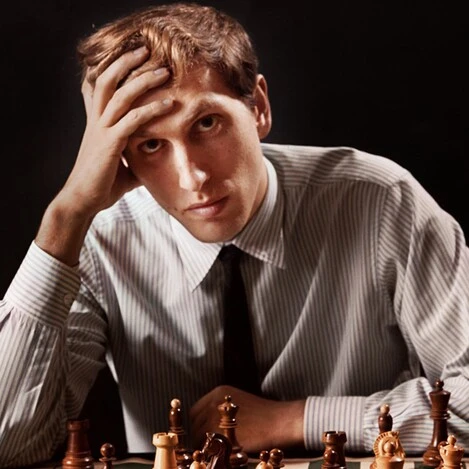
What is the strength and paradox of Fischer?
If I may put it this way - he was a chemically pure chess player, whose concentration during the game was absolutely incredible. I remember the characteristic Alexander Kotov gave him in the 1970s.
"Well, think for yourself: how can you play with such a guy? It's simply impossible!" - "Why is it impossible? Why?" - I asked. "It's very simple, imagine that you are sitting opposite a huge fellow with a horse-like face. He sits there and thinks intently. Not for long. And swiftly makes a move. You rack your brains about what to do in response. You come up with something, hoping that your partner will give you an opportunity to take a little walk, to stretch. But it doesn't happen that way. Almost instantly, he finds yet another move, now the most unpleasant one for you. And promptly delivers it without even rising from his seat. It's as if he's sitting on your shoulders, and after a while, you feel that nothing can save you. He's not a human, he's a machine!"
If I may put it this way - he was a chemically pure chess player, whose concentration during the game was absolutely incredible. I remember the characteristic Alexander Kotov gave him in the 1970s.
"Well, think for yourself: how can you play with such a guy? It's simply impossible!" - "Why is it impossible? Why?" - I asked. "It's very simple, imagine that you are sitting opposite a huge fellow with a horse-like face. He sits there and thinks intently. Not for long. And swiftly makes a move. You rack your brains about what to do in response. You come up with something, hoping that your partner will give you an opportunity to take a little walk, to stretch. But it doesn't happen that way. Almost instantly, he finds yet another move, now the most unpleasant one for you. And promptly delivers it without even rising from his seat. It's as if he's sitting on your shoulders, and after a while, you feel that nothing can save you. He's not a human, he's a machine!"
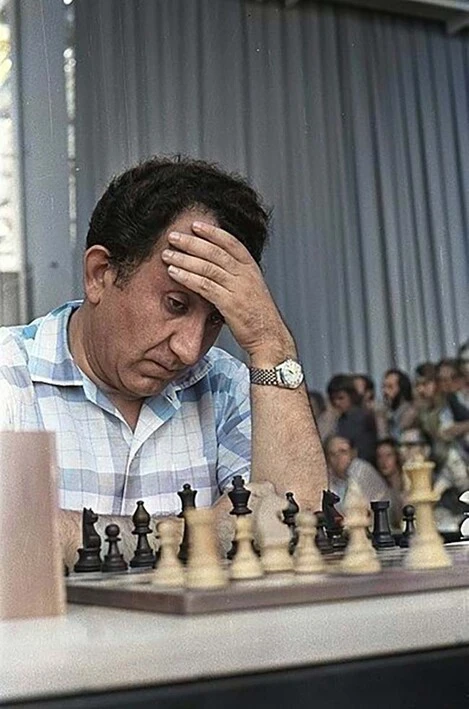
In the article "Why I Lost the Match," Botvinnik wrote, "The era of geniuses in chess is over!" (Clearly, he didn't foresee the emergence of Bobby Fischer and Garry Kasparov.)
"In our days, talent alone is not enough," claimed Botvinnik. According to him, Petrosian had a strange, defensive style that he couldn't understand. In his article, Botvinnik wanted to portray Petrosian as mediocre, someone who couldn't compare to him, Botvinnik. However, with the passing of years, Botvinnik gave a much higher and fairer evaluation of Petrosian, emphasizing that he was indeed a great chess player.
"In our days, talent alone is not enough," claimed Botvinnik. According to him, Petrosian had a strange, defensive style that he couldn't understand. In his article, Botvinnik wanted to portray Petrosian as mediocre, someone who couldn't compare to him, Botvinnik. However, with the passing of years, Botvinnik gave a much higher and fairer evaluation of Petrosian, emphasizing that he was indeed a great chess player.
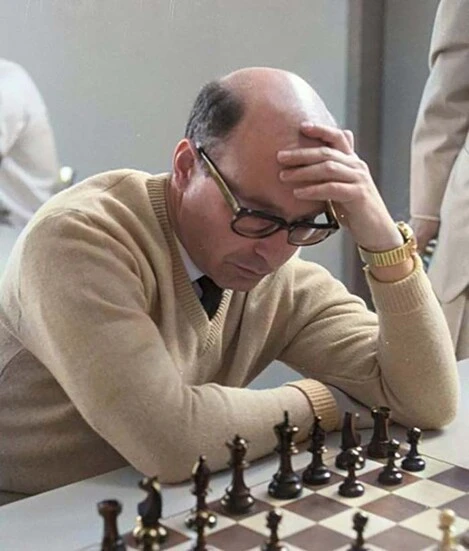
It is believed that a true chess player must possess the qualities of a fighter, a passionate desire to destroy the opponent. This is usually evident in their demeanor, behavior at the chessboard, and even in their appearance. Journalists poetically called this the "killer instinct." This "instinct" was highly developed in Botvinnik, Fischer, and many other chess players. But it was completely absent in David Bronstein.
Once I asked him, "Do you think it's true that Fischer plays brilliantly in endgames?" He smiled strangely and replied, "Do you think I play worse?"
"You know, what I think more and more often?" he said once, "that weightlifting as a sport is much more objective than chess. Chess is not an objective sport!"
Once I asked him, "Do you think it's true that Fischer plays brilliantly in endgames?" He smiled strangely and replied, "Do you think I play worse?"
"You know, what I think more and more often?" he said once, "that weightlifting as a sport is much more objective than chess. Chess is not an objective sport!"
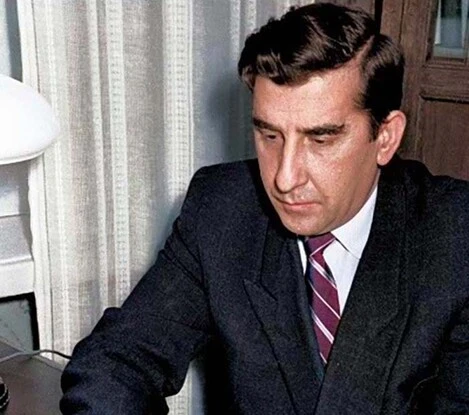
"Listen, Aleksandrovich, I lost the bet to you. So, I'm ready to immediately return you the debt. How do you want it: champagne, money, or something else?" I declined the champagne as I simply didn't know how to drink like Spassky and Bondarevsky. So, he promptly repaid the debt with money.
As for their quarrel, there were different rumors. Some believed it happened after Fischer defeated Spassky, and the latter blamed his coach for not preparing him well. Others said it was due to Bondarevsky's rudeness. Bondarevsky often yelled at Spassky, who would usually respond, "Calm down, Dad!"
As for their quarrel, there were different rumors. Some believed it happened after Fischer defeated Spassky, and the latter blamed his coach for not preparing him well. Others said it was due to Bondarevsky's rudeness. Bondarevsky often yelled at Spassky, who would usually respond, "Calm down, Dad!"
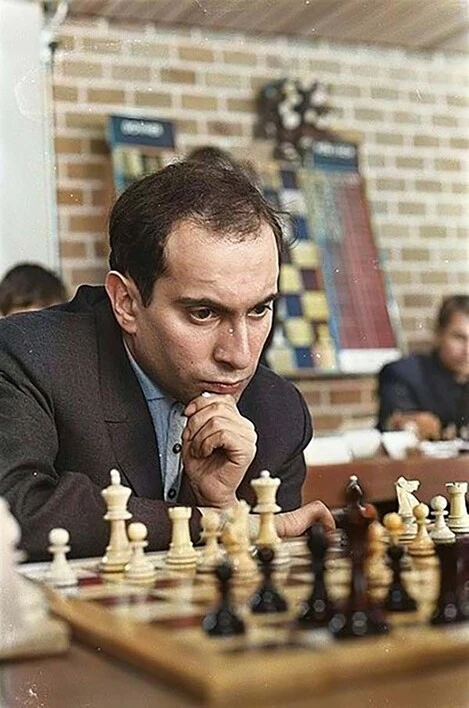
Once, a journalist enthusiast asked him in my presence, "Please tell me, Mikhail Nekhemievich, what is your style? Can we call you a Chigorin player?" At that time, it was a very trendy topic: Chigorin, Chigorin players—everyone was talking about them. But Tal replied, "No, I am not a Chigorin player, I am a morphinist."
He said this not because he was injected with morphine almost every day to relieve his pain, but because he was a genuine admirer of the great American chess player Morphy.
He said this not because he was injected with morphine almost every day to relieve his pain, but because he was a genuine admirer of the great American chess player Morphy.
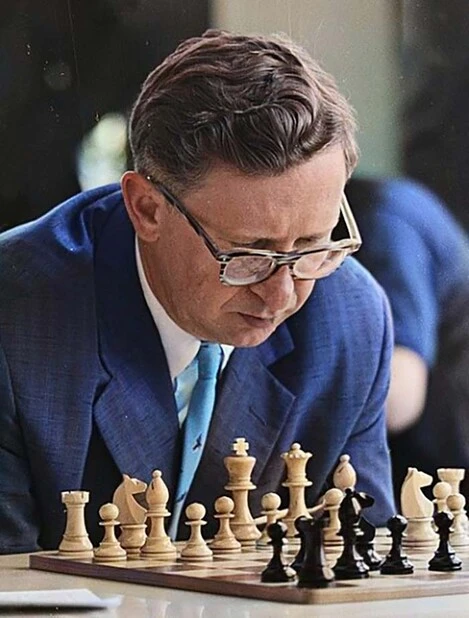
Smyslov was a worthy opponent of Botvinnik. It wouldn't be wrong to say that he was practically the world champion for many years, although officially he held the title for only two years.
Smyslov was the only one of Botvinnik's rivals to whom he had no animosity and, perhaps, even some sympathy. And it was hard to have a negative opinion of him.
Smyslov was the only one of Botvinnik's rivals to whom he had no animosity and, perhaps, even some sympathy. And it was hard to have a negative opinion of him.
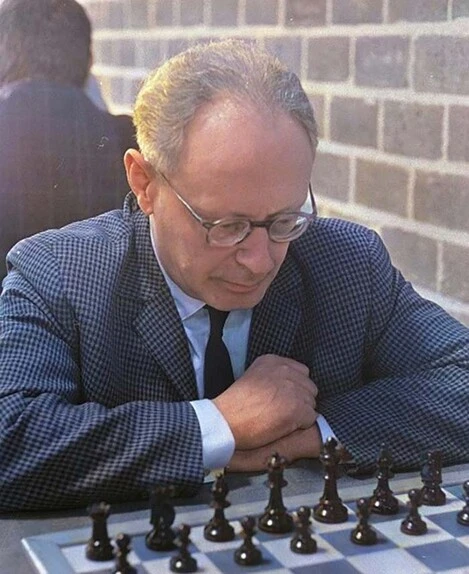
Furman was an outstanding theorist and analyst. He would sit, analyze, and discover many interesting things. The next day, he met with Botvinnik and handed everything over to him. "Did you sign it?" was the first question. "Yes!" - "Good, leave it, I'll tell you in a couple of hours."
A couple of hours later, they met, and Furman, burning with impatience, asked, "Well, Mykhailo Moiseyevych, what do you think of my analysis?" - "Your analysis is nonsense!" - "But how can it be, Mykhailo Moiseyevych? I found good chances for salvation there!" - "The conversation is over!"
A couple of hours later, they met, and Furman, burning with impatience, asked, "Well, Mykhailo Moiseyevych, what do you think of my analysis?" - "Your analysis is nonsense!" - "But how can it be, Mykhailo Moiseyevych? I found good chances for salvation there!" - "The conversation is over!"