


What distinguishes a combination from a maneuver? - Sacrifice.
What is a combination? A combination is a forced option with a sacrifice.
A combination should not be confused with a forced maneuver.
What is the difference between a combination and a forced maneuver?
A forced maneuver is a forced option without a sacrifice.
What is a combination? A combination is a forced option with a sacrifice.
A combination should not be confused with a forced maneuver.
What is the difference between a combination and a forced maneuver?
A forced maneuver is a forced option without a sacrifice.
Recently, various fields of science and technology have begun to introduce technical standards for terms and definitions.
This is due to necessity: ambiguous interpretations of objects and phenomena are sometimes expensive. And in the theory of chess tactics, many things also need to be clarified and formulated more clearly.
This will benefit all chess enthusiasts who want to improve.
This is due to necessity: ambiguous interpretations of objects and phenomena are sometimes expensive. And in the theory of chess tactics, many things also need to be clarified and formulated more clearly.
This will benefit all chess enthusiasts who want to improve.
Everyone agrees that a combination is the highest expression of beauty in chess.
Tartakovsky once described it as "...the possibility of the impossible. It is a divine spark that... illuminates a chess game like a meteor."
"We call chess an art," wrote O. Kotov, "primarily because it has the beauty of combinations that brings aesthetic pleasure to every true chess lover.
Tartakovsky once described it as "...the possibility of the impossible. It is a divine spark that... illuminates a chess game like a meteor."
"We call chess an art," wrote O. Kotov, "primarily because it has the beauty of combinations that brings aesthetic pleasure to every true chess lover.
As you can see, a coordinated system of connections also arises when a pawn is transformed into a queen.
It consists of one active link (the threat of transformation) and the sum of the limiting links of both sides equal to zero.
And all these links are coordinated with respect to the transformation field.
So, our conclusion is correct: to win in chess, you need to achieve a coordinated combination of connections.
It consists of one active link (the threat of transformation) and the sum of the limiting links of both sides equal to zero.
And all these links are coordinated with respect to the transformation field.
So, our conclusion is correct: to win in chess, you need to achieve a coordinated combination of connections.
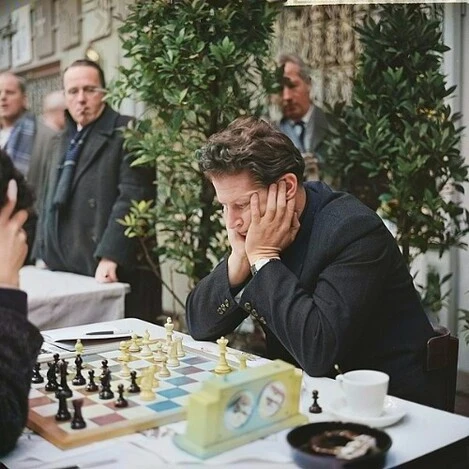
This combination of pieces and pawns, which, under certain permutations, allows one of the partners to forcefully turn it to his advantage, is already a combination.
However, such a definition, without reflecting subsequent transformations, is static; it emphasizes the initial position in which future and often unexpected (at least for one of the opponents) events can be hidden and not visible to the "naked" eye.
However, such a definition, without reflecting subsequent transformations, is static; it emphasizes the initial position in which future and often unexpected (at least for one of the opponents) events can be hidden and not visible to the "naked" eye.
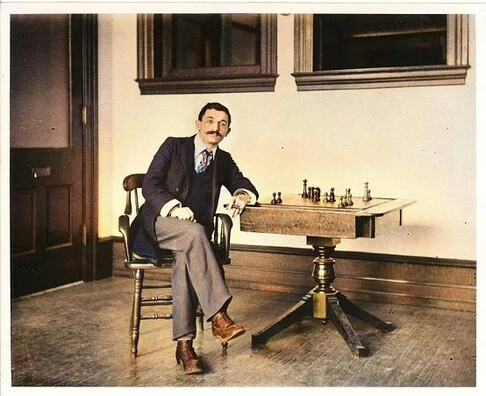
He suggests expanding the chessboard to 100 squares and at the same time increasing the number of pieces, 4 on each side, including two pawns and two newly introduced pieces.
Of these latter pieces, Capablanca suggests that one should be endowed with the powers of a knight and a rook, and the other with the powers of a bishop and a knight.
Of these latter pieces, Capablanca suggests that one should be endowed with the powers of a knight and a rook, and the other with the powers of a bishop and a knight.
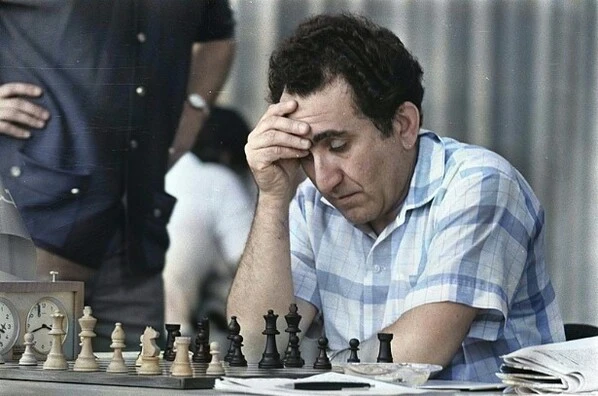
What is chess talent and how does it manifest itself is a topic for a large and not yet entirely clear conversation.
I can only assume the difference between a talented chess player and a merely strong one.
A strong chess player knows all the rules and laws of the game.
A talented chess player...
I can only assume the difference between a talented chess player and a merely strong one.
A strong chess player knows all the rules and laws of the game.
A talented chess player...
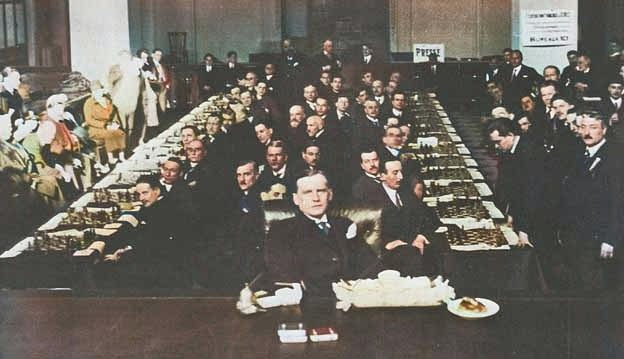
People often ask me how I can play so many blind games at the same time.
I think I owe it to my innate memory sharpness, which is channeled into the appropriate direction thanks to my thorough familiarity with the chessboard and my deep insight into the very essence of the game of chess.
I think I owe it to my innate memory sharpness, which is channeled into the appropriate direction thanks to my thorough familiarity with the chessboard and my deep insight into the very essence of the game of chess.
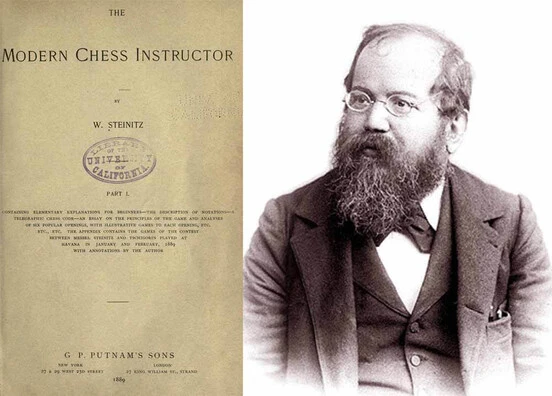
The first piece of advice is that students should try to play as much as possible on an equal footing with stronger chess players.
A good way to develop the power of chess understanding and memory is to get into the habit of playing your own games from memory, or even better, games by masters published with good commentary in books and magazines.
A good way to develop the power of chess understanding and memory is to get into the habit of playing your own games from memory, or even better, games by masters published with good commentary in books and magazines.
If you want to have knowledge of the mechanisms that lead to victory, you need to understand what the fight is about, what the defense is aimed at, and where the object of attack is. But this is not enough. You need burning, imagination, will, search, thirst to find a real solution in the competition with another personality. When all this is present, a chess genius appears.