


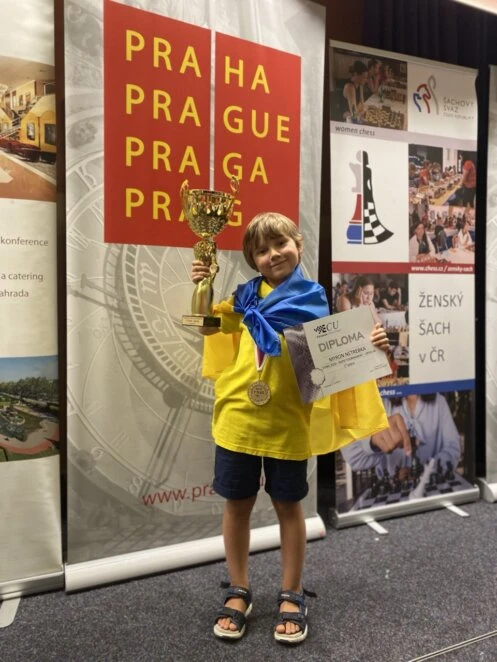
Myron Netrebka, a young chess player from Dnipro, won the gold medal at the European Championship. The young talent is only 7 years old, and he can already confidently beat his older colleagues. It's hard for the boy to find a free minute.
How to teach chess to children? No books have been written on this topic yet. Meanwhile, children's thinking has its own peculiarities, which the teacher must take into account. In children, concrete thinking prevails over abstract thinking.
...
One of the ways to organize children's attention is to teach them chess notation, requiring them to write down and analyze each game they play.
...
It is especially important to analyze combinations, not only those that occurred in the game, but also those that went unnoticed.
...
This is another example of the care with which abstract concepts should be taught to children. This is not a “star”. This is a reaction to a “flank attack”.
...
Most parents tend to overestimate their children's chess abilities. This is probably also due to the emotions that others experience when they see a child playing an adult.
...
There have been cases where six to eight year olds have been declared chess prodigies.
...
It should be noted that one should not rush to conclusions about the “promise” or “lack of promise” of students.
...
However, children's decisions are subject to their own laws.
...
A game calculated on the opponent's mistake usually consists of bad moves and is justified in sports terms only if the opponent falls into a “trap”. Creatively, it is not justified at all, because because the opponent has “gone down”, the winner's bad moves do not become good ones
...
“If you touch, move” is the immutable law of the novice chess player.
...
It is known that theory and practice are one. A theory that is not based on practice is an empty sound.
...
A special difficulty is caused by showing the basics of the endgame, which seems boring and uninteresting to children.
...
Classes are lively when the endgame under study is played on the demonstration board by two representatives of the training group, who evaluate it differently.
...
One of the ways to organize children's attention is to teach them chess notation, requiring them to write down and analyze each game they play.
...
It is especially important to analyze combinations, not only those that occurred in the game, but also those that went unnoticed.
...
This is another example of the care with which abstract concepts should be taught to children. This is not a “star”. This is a reaction to a “flank attack”.
...
Most parents tend to overestimate their children's chess abilities. This is probably also due to the emotions that others experience when they see a child playing an adult.
...
There have been cases where six to eight year olds have been declared chess prodigies.
...
It should be noted that one should not rush to conclusions about the “promise” or “lack of promise” of students.
...
However, children's decisions are subject to their own laws.
...
A game calculated on the opponent's mistake usually consists of bad moves and is justified in sports terms only if the opponent falls into a “trap”. Creatively, it is not justified at all, because because the opponent has “gone down”, the winner's bad moves do not become good ones
...
“If you touch, move” is the immutable law of the novice chess player.
...
It is known that theory and practice are one. A theory that is not based on practice is an empty sound.
...
A special difficulty is caused by showing the basics of the endgame, which seems boring and uninteresting to children.
...
Classes are lively when the endgame under study is played on the demonstration board by two representatives of the training group, who evaluate it differently.
Can preschoolers play chess!
...
First you need to capture
...
How to captivate a child!
...
How to capture!
...
Break time
...
What a benefit to children!
...
The beauty of chess games, combinations and sketches contribute to the education of aesthetic feelings.
...
Chess has not yet received proper recognition in pedagogical science only because its value is not so much in direct, visual results as in more distant ones that are not immediately visible, they are manifested in learning and work.
...
First you need to capture
...
How to captivate a child!
...
How to capture!
...
Break time
...
What a benefit to children!
...
The beauty of chess games, combinations and sketches contribute to the education of aesthetic feelings.
...
Chess has not yet received proper recognition in pedagogical science only because its value is not so much in direct, visual results as in more distant ones that are not immediately visible, they are manifested in learning and work.
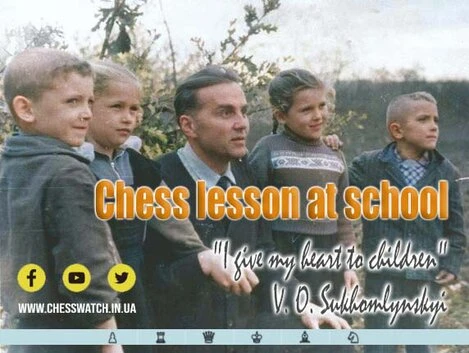
The prominent Ukrainian educator V.O. Sukhomlynskyi (1918-1970) tells about his experience of working at school, about how to introduce children to the world of knowledge, and how to facilitate their mental work.
...
Talking about the education of a culture of thinking, Sukhomlynsky pays serious attention to chess.
...
Chess is a great school of consistent logical thinking.
...
In the organization of chess lessons at school, there is still a lot of artisanalism, and pedagogical science does not generalize the useful experience gained. And it would be worthwhile for educators to listen carefully to the words and assessments of V.O. Sukhomlinsky.
...
We often hear that chess should not be introduced as a compulsory lesson at school. It is said to be uninteresting for many children, it will be a burden to them.
...
The main purpose of the lessons is not to train highly classified chess players. The main thing is to reveal the beauty of chess, to help children develop the useful qualities that familiarity with chess brings. And for those students who want to study the theory more deeply in the future, the first lessons will do a good service.
...
A prerequisite is to combine theory with practice. Organize tournaments in the classroom, let the children play with each other.
...
There are many techniques that help chess players develop certain skills.
...
Organizing chess lessons at school is not as difficult as it may seem at first glance.
...
Talking about the education of a culture of thinking, Sukhomlynsky pays serious attention to chess.
...
Chess is a great school of consistent logical thinking.
...
In the organization of chess lessons at school, there is still a lot of artisanalism, and pedagogical science does not generalize the useful experience gained. And it would be worthwhile for educators to listen carefully to the words and assessments of V.O. Sukhomlinsky.
...
We often hear that chess should not be introduced as a compulsory lesson at school. It is said to be uninteresting for many children, it will be a burden to them.
...
The main purpose of the lessons is not to train highly classified chess players. The main thing is to reveal the beauty of chess, to help children develop the useful qualities that familiarity with chess brings. And for those students who want to study the theory more deeply in the future, the first lessons will do a good service.
...
A prerequisite is to combine theory with practice. Organize tournaments in the classroom, let the children play with each other.
...
There are many techniques that help chess players develop certain skills.
...
Organizing chess lessons at school is not as difficult as it may seem at first glance.
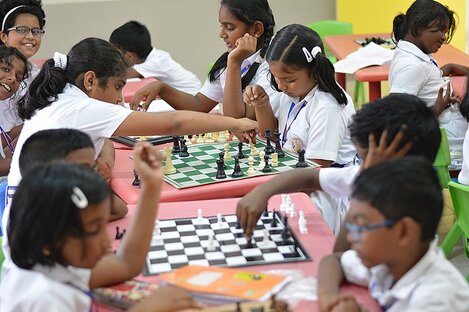
- The most important stages of creative development.
- Individual work of the coach.
- Acquired skills of the student.
- Culture of behavior and morality of a young chess player.
- Acquired skills of the teacher.
- Individual work of the coach.
- Acquired skills of the student.
- Culture of behavior and morality of a young chess player.
- Acquired skills of the teacher.
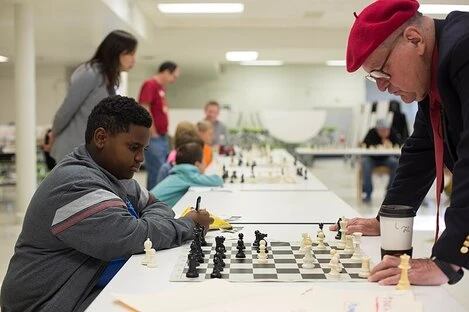
Among the teacher's difficulties is the intellectual passivity of the students and their unwillingness to think. Children often listen attentively to the teacher, carefully performing the part of the work where simple copying is enough.
...
Let the student feel that the teacher believes in his or her strengths, expects effort and responsibility from him or her, and is ready to help.
...
How to study debuts? The first two ... years should be taught chess theory, developing ... their combinational abilities.
...
The main thing at this stage is to develop self-confidence. Many students at this age have mood swings, a "fragile" psyche, and an inability to endure defeat.
...
The main skill of a young chess player, which he must acquire by the end of the third year of study, is a CONSTANT SENSE OF THE LINKS BETWEEN THE FIGURES IN THE GAME.
...
Let the student feel that the teacher believes in his or her strengths, expects effort and responsibility from him or her, and is ready to help.
...
How to study debuts? The first two ... years should be taught chess theory, developing ... their combinational abilities.
...
The main thing at this stage is to develop self-confidence. Many students at this age have mood swings, a "fragile" psyche, and an inability to endure defeat.
...
The main skill of a young chess player, which he must acquire by the end of the third year of study, is a CONSTANT SENSE OF THE LINKS BETWEEN THE FIGURES IN THE GAME.
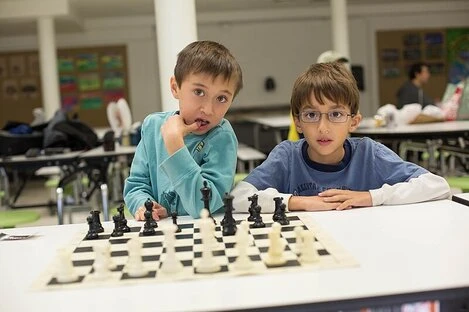
The teacher needs to structure lessons in a way that each class contains a hidden "spark" allowing the student - under certain tension on their part - to independently "uncover" the essence of the newly studied concept.
...
The main thing in this is to instill in the student the desire and ability to "use their brains". In this challenging period for the student, the teacher's approval is an important push when storming the "granite" of chess science.
...
The coach's key task is to help the student experience such an important FEELING OF SUCCESS when the nearest sports goal is achieved, and a specific skill is mastered.
...
...there are many positions when even a significant material advantage is insufficient for victory. They arouse children's curiosity, mixed... with skepticism…
...
I would like to add that the most important thing for an educator is to engage the students, as enthusiasm is the foundation of all successes.
...
The main thing in this is to instill in the student the desire and ability to "use their brains". In this challenging period for the student, the teacher's approval is an important push when storming the "granite" of chess science.
...
The coach's key task is to help the student experience such an important FEELING OF SUCCESS when the nearest sports goal is achieved, and a specific skill is mastered.
...
...there are many positions when even a significant material advantage is insufficient for victory. They arouse children's curiosity, mixed... with skepticism…
...
I would like to add that the most important thing for an educator is to engage the students, as enthusiasm is the foundation of all successes.
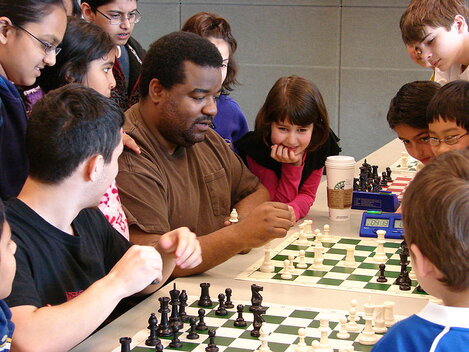
Children respond very well to EXCEPTIONS when, for example, a pawn is stronger than a queen.
...
A very important feature of IMAGINATIVE THINKING is the establishment of unusual, "incredible" combinations of objects and their properties.
...
The goal of a chess game is to checkmate the opponent's king. This is the central theme of this stage of learning.
...
And it is imperative (otherwise everything will be in vain) that each of your students from time to time feel the joy of victory.
...
A very important feature of IMAGINATIVE THINKING is the establishment of unusual, "incredible" combinations of objects and their properties.
...
The goal of a chess game is to checkmate the opponent's king. This is the central theme of this stage of learning.
...
And it is imperative (otherwise everything will be in vain) that each of your students from time to time feel the joy of victory.
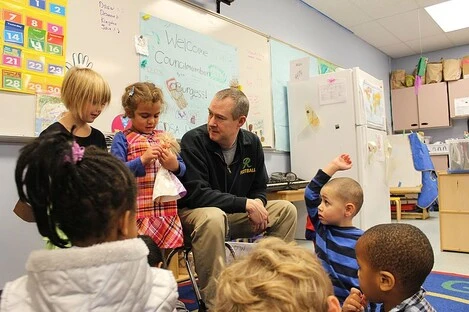
By teaching a child to play chess, in addition to a specific goal, we achieve a more significant result - the child develops the ability to act in the mind.
In the game of chess, a natural transition is made from actions with objects, chess pieces, and their movement to actions with ideas about these objects, i.e., in the internal plane.
The newly formed ability, as shown by numerous studies, is transferred to other areas of the child's activity.
In the game of chess, a natural transition is made from actions with objects, chess pieces, and their movement to actions with ideas about these objects, i.e., in the internal plane.
The newly formed ability, as shown by numerous studies, is transferred to other areas of the child's activity.
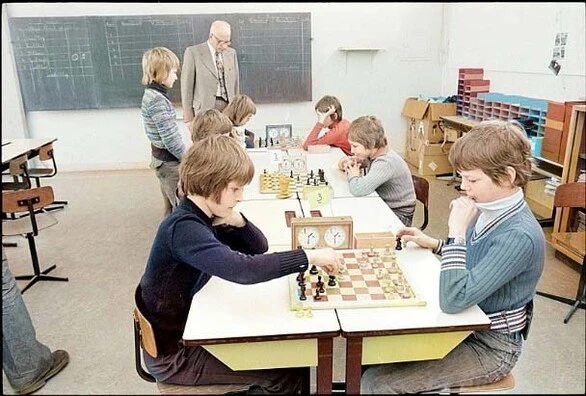
What is chess at school?
1. Chess in the form of lessons is a means of expanding the general mental outlook of students, which contributes to a deeper and faster learning of school knowledge.
2. Chess lessons contribute to general educational work.
1. Chess in the form of lessons is a means of expanding the general mental outlook of students, which contributes to a deeper and faster learning of school knowledge.
2. Chess lessons contribute to general educational work.