


This material also suggests that the training of young chess players is currently carried out somewhat one-sidedly.
The training is limited to explaining different variants of the game, openings and typical, most rational continuations, and analyzing combinations and games.
At present, there are no specially developed methods for training the ability to quickly see the meaning of any position, to grasp the essential connections between its elements, which characterizes great chess masters.
The training is limited to explaining different variants of the game, openings and typical, most rational continuations, and analyzing combinations and games.
At present, there are no specially developed methods for training the ability to quickly see the meaning of any position, to grasp the essential connections between its elements, which characterizes great chess masters.
On average, an experienced chess player's fixation time on one point is 0.24 seconds.
During this time, a chess player can display several board squares, evaluate the pieces on these squares, and develop a strategy for further inspection of the board.
This suggests that gradually, in the course of practice, a chess player acquires the ability to simultaneously operate on several elements of a situation.
During this time, a chess player can display several board squares, evaluate the pieces on these squares, and develop a strategy for further inspection of the board.
This suggests that gradually, in the course of practice, a chess player acquires the ability to simultaneously operate on several elements of a situation.
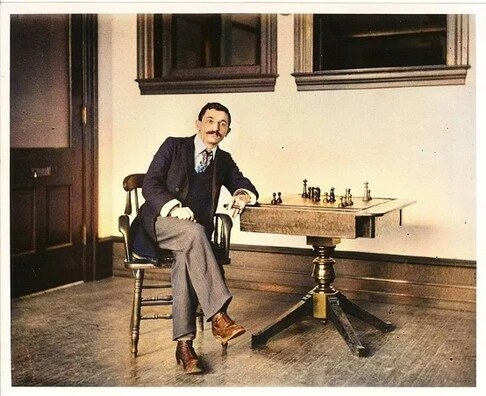
He suggests expanding the chessboard to 100 squares and at the same time increasing the number of pieces, 4 on each side, including two pawns and two newly introduced pieces.
Of these latter pieces, Capablanca suggests that one should be endowed with the powers of a knight and a rook, and the other with the powers of a bishop and a knight.
Of these latter pieces, Capablanca suggests that one should be endowed with the powers of a knight and a rook, and the other with the powers of a bishop and a knight.
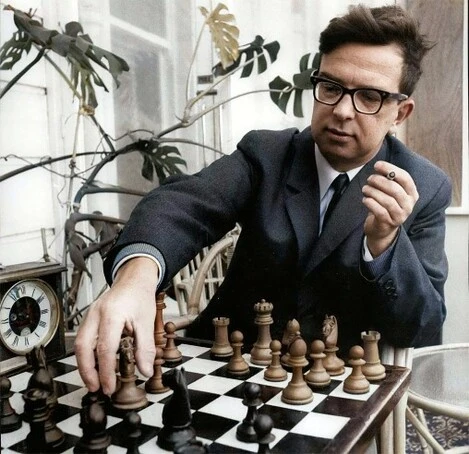
All power is in concentration.
This should be considered the main rule of thinking - focusing attention.
With a conscious, purposeful switching of attention, the combination of perception and imagination in anticipatory images contributes to the development of the creative imagination of chess players.
This property of attention is evident in many games by M. Tal, D. Bronstein, A. Lilienthal, and R. Nezhmetdinov.
This should be considered the main rule of thinking - focusing attention.
With a conscious, purposeful switching of attention, the combination of perception and imagination in anticipatory images contributes to the development of the creative imagination of chess players.
This property of attention is evident in many games by M. Tal, D. Bronstein, A. Lilienthal, and R. Nezhmetdinov.
However, it is not enough to possess chess talent and chess knowledge - one must also have those nonchess data, without which successes corresponding to the degree of chess ability and knowledge are absolutely impossible.
A chess player who persistently strives for victory and improvement, developing the data necessary for chess success, thereby inevitably embarks on the path of developing a number of positive properties of his psyche;
at the same time, he also outlives many negative traits of his psyche that hinder his chess success.
A chess player who persistently strives for victory and improvement, developing the data necessary for chess success, thereby inevitably embarks on the path of developing a number of positive properties of his psyche;
at the same time, he also outlives many negative traits of his psyche that hinder his chess success.
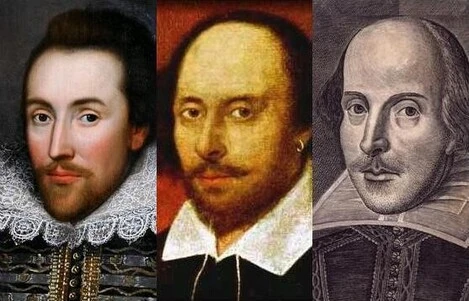
Shakespeare holds a bishop in his hand, with which he takes his opponent's queen and checkmates White.
The meaning of the painting is "Shakespeare checkmates Ben Jonson". Yes, this is exactly what happened in 1602-1603.
Johnson's drama Roman Tragedy was a fiasco, and Shakespeare was at the height of his fame.
The meaning of the painting is "Shakespeare checkmates Ben Jonson". Yes, this is exactly what happened in 1602-1603.
Johnson's drama Roman Tragedy was a fiasco, and Shakespeare was at the height of his fame.
What is chess talent and how does it manifest itself is a topic for a large and not yet entirely clear conversation.
I can only assume the difference between a talented chess player and a merely strong one.
A strong chess player knows all the rules and laws of the game.
A talented chess player...
I can only assume the difference between a talented chess player and a merely strong one.
A strong chess player knows all the rules and laws of the game.
A talented chess player...
In every serious game, it is impossible to accurately calculate the consequences of most moves, at least by virtue of the time limit.
It's up to your feelings, the strength of your judgment, or, to use a chess term, your positional sense.
And the finer this positional sense is, the stronger the chess player, the more undoubted his talent, the closer he is to genius.
It's up to your feelings, the strength of your judgment, or, to use a chess term, your positional sense.
And the finer this positional sense is, the stronger the chess player, the more undoubted his talent, the closer he is to genius.
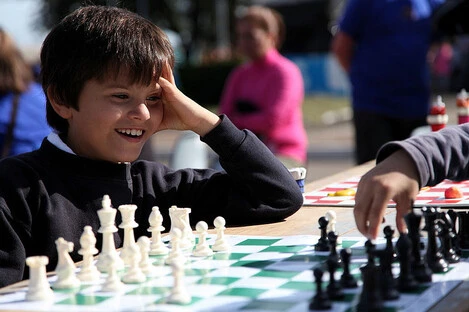
By playing chess, a child learns what traditional school disciplines do not teach well: to correlate mental processes with practical actions, to look for theoretical answers to practical questions, to creatively apply the knowledge gained during the lesson without expecting ready-made solutions from the theory.
Chess stimulates independent thinking, rewarding the search for non-trivial solutions with an aesthetic sense of beauty.
Chess teaches creativity.
Chess stimulates independent thinking, rewarding the search for non-trivial solutions with an aesthetic sense of beauty.
Chess teaches creativity.
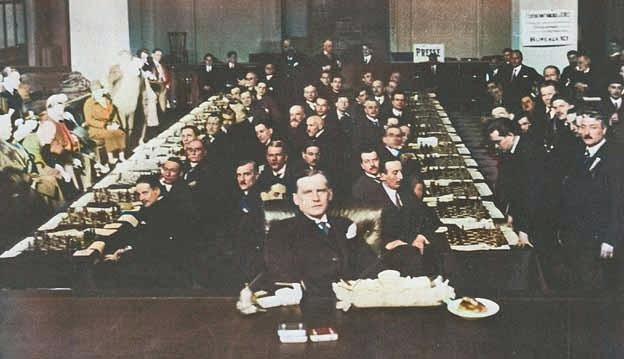
People often ask me how I can play so many blind games at the same time.
I think I owe it to my innate memory sharpness, which is channeled into the appropriate direction thanks to my thorough familiarity with the chessboard and my deep insight into the very essence of the game of chess.
I think I owe it to my innate memory sharpness, which is channeled into the appropriate direction thanks to my thorough familiarity with the chessboard and my deep insight into the very essence of the game of chess.