


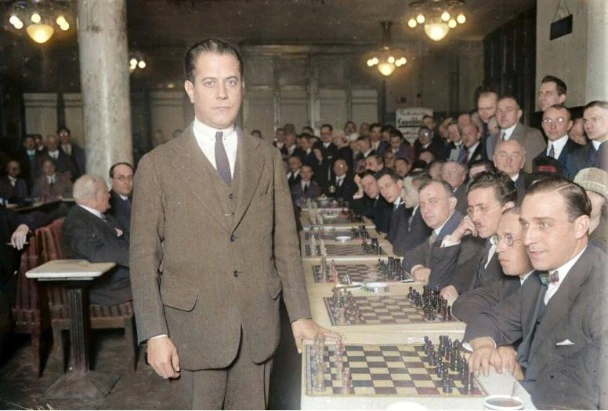
Presentamos las principales conclusiones del análisis:
1.Debut: Se ha identificado la alta intuición desarrollada de X. R. Capablanca en la elección de continuaciones confiables y prácticamente viables...
2.Mittelspiel: Se basa principalmente en una evaluación intuitiva rápida de la situación. Como resultado, juega con rapidez y facilidad a pesar de la falta evidente de pensamiento crítico...
3.Finales: Se destaca la notable habilidad técnica de X. R. Capablanca en esta etapa de la partida, pero juega relativamente más débil en posiciones de carácter...
1.Debut: Se ha identificado la alta intuición desarrollada de X. R. Capablanca en la elección de continuaciones confiables y prácticamente viables...
2.Mittelspiel: Se basa principalmente en una evaluación intuitiva rápida de la situación. Como resultado, juega con rapidez y facilidad a pesar de la falta evidente de pensamiento crítico...
3.Finales: Se destaca la notable habilidad técnica de X. R. Capablanca en esta etapa de la partida, pero juega relativamente más débil en posiciones de carácter...
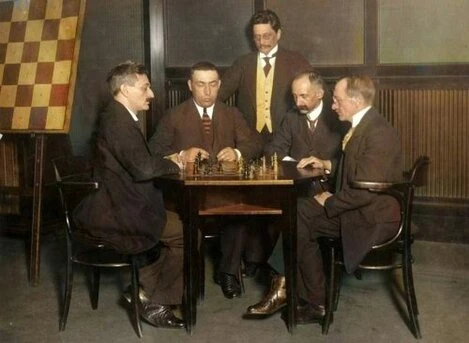
Em. Lasker fue el primero de los grandes ajedrecistas que se dio cuenta de la importancia de estudiar la personalidad de los adversarios en el ajedrez.
Em. Lasker señaló en repetidas ocasiones que "las personas luchan sobre tableros de ajedrez, no sobre piezas de madera".
Em. Lasker señaló en repetidas ocasiones que "las personas luchan sobre tableros de ajedrez, no sobre piezas de madera".
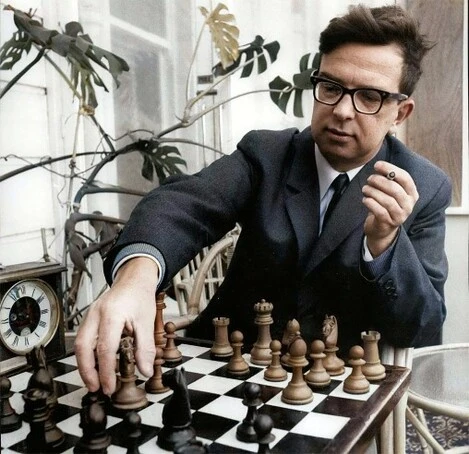
All power is in concentration.
This should be considered the main rule of thinking - focusing attention.
With a conscious, purposeful switching of attention, the combination of perception and imagination in anticipatory images contributes to the development of the creative imagination of chess players.
This property of attention is evident in many games by M. Tal, D. Bronstein, A. Lilienthal, and R. Nezhmetdinov.
This should be considered the main rule of thinking - focusing attention.
With a conscious, purposeful switching of attention, the combination of perception and imagination in anticipatory images contributes to the development of the creative imagination of chess players.
This property of attention is evident in many games by M. Tal, D. Bronstein, A. Lilienthal, and R. Nezhmetdinov.
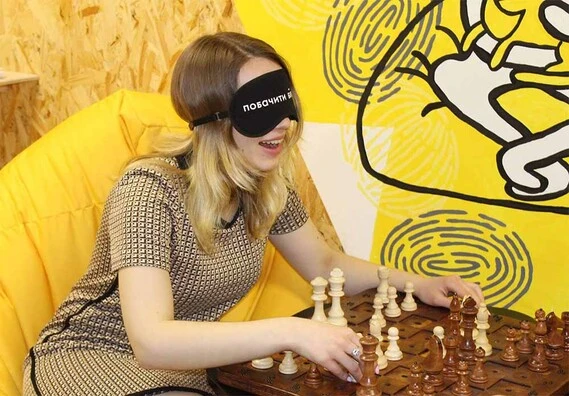
Ф. Duz-Khotimirsky pointed out that playing blindly contributes to the development of combination vision.
...
An empty board greatly facilitates the creation of spatial representations of the struggle in the game, expands the zone of mental focus and helps to better memorize the location of the pieces.
...
An empty board greatly facilitates the creation of spatial representations of the struggle in the game, expands the zone of mental focus and helps to better memorize the location of the pieces.
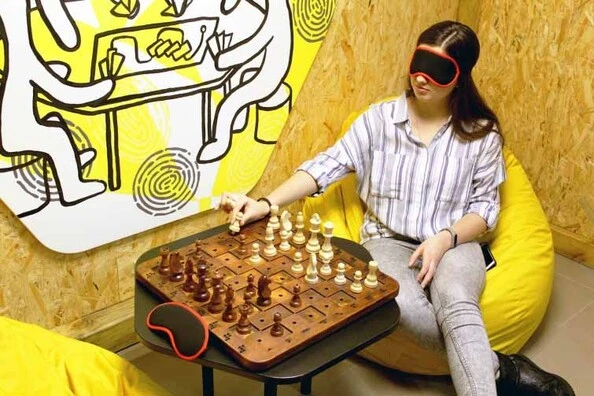
Thus, in different types of chess activities - playing at the board, analyzing and playing blindly - one can notice a common thing - the need to plan future operations "in the mind".
Ф. Duz-Khotimirski rightly noted: "Chess is basically a game of blindness. A chess player operates with pieces in his imagination, conducts combinations and maneuvers that have not yet taken place."
Ф. Duz-Khotimirski rightly noted: "Chess is basically a game of blindness. A chess player operates with pieces in his imagination, conducts combinations and maneuvers that have not yet taken place."