


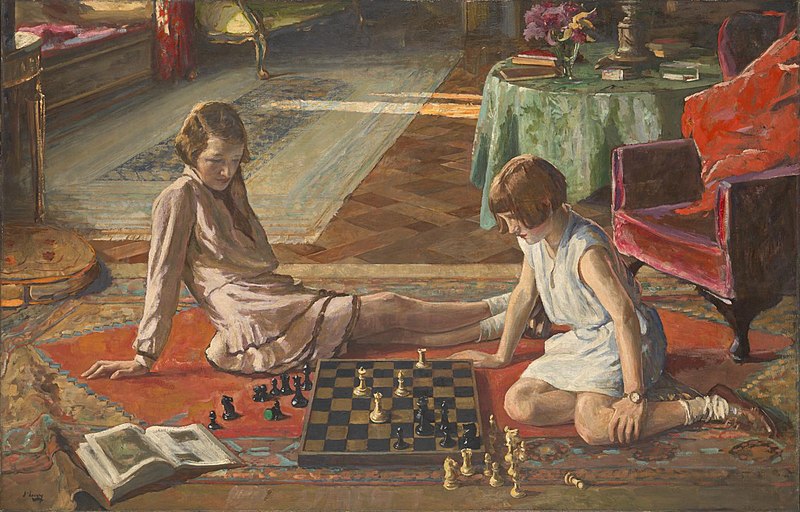
A combination is born in the chess player's head.
Many thoughts strive for realization - correct and erroneous, strong and weak, practical and impractical.
They are born and fight with each other until one of them prevails.
Many thoughts strive for realization - correct and erroneous, strong and weak, practical and impractical.
They are born and fight with each other until one of them prevails.
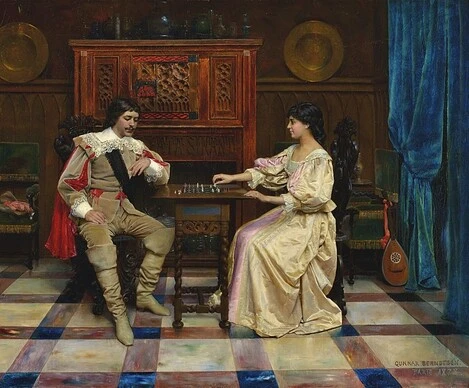
The alphabet of the game is its rules: the goal of the game (checkmate), the turn-taking, the rules of the movement of the pieces, and so on.
All these techniques are consciously learned, but over time, the process of applying them becomes automated.
This manifests itself in the fact that the board and the pieces are perceived unconsciously as spatial, dynamic, and meaningful relationships according to the rules of the game, and this transformation of visual impressions into meaningful relationships occurs with unusual speed, so the intermediate links in the process usually become inaccessible to self-observation.
All these techniques are consciously learned, but over time, the process of applying them becomes automated.
This manifests itself in the fact that the board and the pieces are perceived unconsciously as spatial, dynamic, and meaningful relationships according to the rules of the game, and this transformation of visual impressions into meaningful relationships occurs with unusual speed, so the intermediate links in the process usually become inaccessible to self-observation.
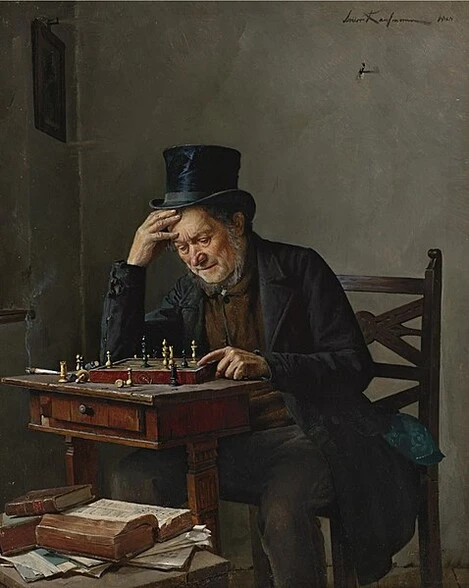
The thinking of a chess player is also characterized by visual perception: it is related to the visual perception of the board, the pieces on the board, and the spatial relationships between them, as well as with visual images created by the imagination during the thought process of moving the pieces.
Games change, ideas remain.
It is possible to classify chess ideas by their types, genera and species.
Establishing this classification will clarify the art of chess and help its study.
It is possible to classify chess ideas by their types, genera and species.
Establishing this classification will clarify the art of chess and help its study.
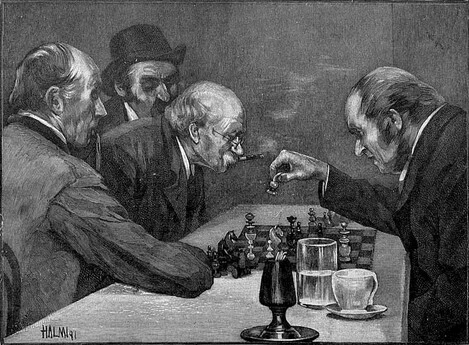
Having studied a huge number of different games played during my long chess career, I have identified several types of mistakes that recur over and over again.
All these mistakes have a psychological basis.
Familiarity with them is interesting both from the point of view of an in-depth study of chess creativity and from a practical point of view.
All these mistakes have a psychological basis.
Familiarity with them is interesting both from the point of view of an in-depth study of chess creativity and from a practical point of view.
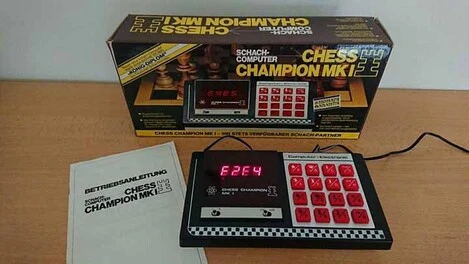
So how does heuristics differ from the traditional psychology of thinking?
The new thing is that, having made the thinking of a chess player the main object of its research, heuristics not only learns the patterns of productive thinking, but also develops methods of machine and mathematical modeling of the human way of solving complex problems.
Two scientific fields are intertwined in heuristics: programmers draw information from experimental psychology, while psychologists test their hypotheses on program models.
The new thing is that, having made the thinking of a chess player the main object of its research, heuristics not only learns the patterns of productive thinking, but also develops methods of machine and mathematical modeling of the human way of solving complex problems.
Two scientific fields are intertwined in heuristics: programmers draw information from experimental psychology, while psychologists test their hypotheses on program models.
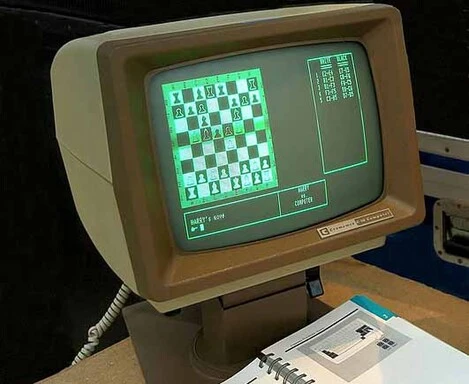
An engineer designing a complex structure, an investigator trying to solve a complicated crime, a doctor making a diagnosis in difficult cases - these and many other situations require not only knowledge but also imagination and creative ingenuity.
For machines to be able to solve complex problems, it is important to comprehensively model human information processing and, in particular, the thinking processes of a chess player on a computer.
For machines to be able to solve complex problems, it is important to comprehensively model human information processing and, in particular, the thinking processes of a chess player on a computer.
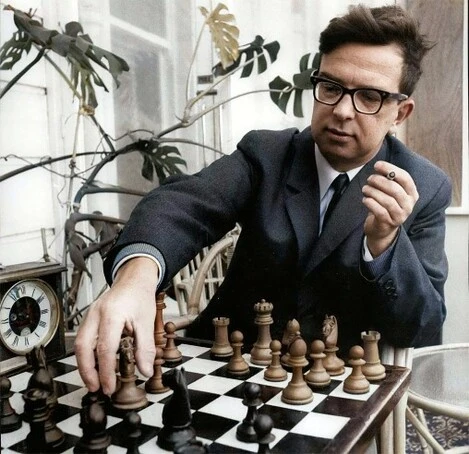
All power is in concentration.
This should be considered the main rule of thinking - focusing attention.
With a conscious, purposeful switching of attention, the combination of perception and imagination in anticipatory images contributes to the development of the creative imagination of chess players.
This property of attention is evident in many games by M. Tal, D. Bronstein, A. Lilienthal, and R. Nezhmetdinov.
This should be considered the main rule of thinking - focusing attention.
With a conscious, purposeful switching of attention, the combination of perception and imagination in anticipatory images contributes to the development of the creative imagination of chess players.
This property of attention is evident in many games by M. Tal, D. Bronstein, A. Lilienthal, and R. Nezhmetdinov.
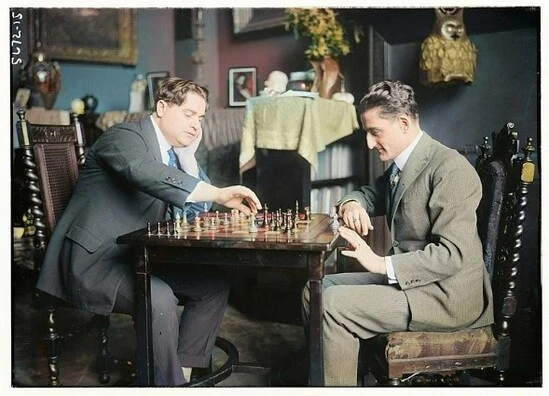
However, it is not enough to possess chess talent and chess knowledge - one must also have those nonchess data, without which successes corresponding to the degree of chess ability and knowledge are absolutely impossible.
A chess player who persistently strives for victory and improvement, developing the data necessary for chess success, thereby inevitably embarks on the path of developing a number of positive properties of his psyche;
at the same time, he also outlives many negative traits of his psyche that hinder his chess success.
A chess player who persistently strives for victory and improvement, developing the data necessary for chess success, thereby inevitably embarks on the path of developing a number of positive properties of his psyche;
at the same time, he also outlives many negative traits of his psyche that hinder his chess success.
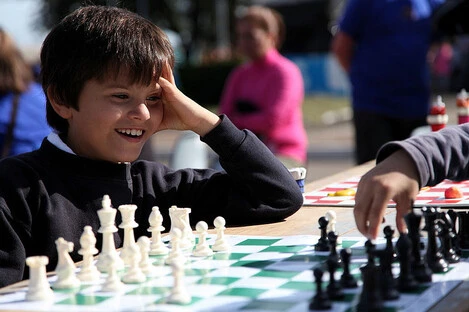
By playing chess, a child learns what traditional school disciplines do not teach well: to correlate mental processes with practical actions, to look for theoretical answers to practical questions, to creatively apply the knowledge gained during the lesson without expecting ready-made solutions from the theory.
Chess stimulates independent thinking, rewarding the search for non-trivial solutions with an aesthetic sense of beauty.
Chess teaches creativity.
Chess stimulates independent thinking, rewarding the search for non-trivial solutions with an aesthetic sense of beauty.
Chess teaches creativity.