


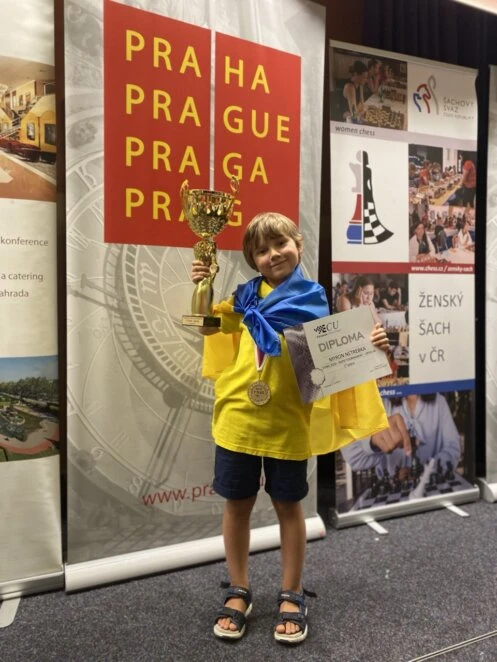
Myron Netrebka, a young chess player from Dnipro, won the gold medal at the European Championship. The young talent is only 7 years old, and he can already confidently beat his older colleagues. It's hard for the boy to find a free minute.

The results of the study showed that this system of tasks helps to learn not only the ways of activity and experience of creative activity, but also the emotional and value component of social experience.
...
At the same time, the acquisition of the second and third components of social experience when using the system of didactic chess tasks involves a mandatory reliance on emotional experience - the fourth, emotional and value component of social experience.
...
The ascertaining experiment helped to determine the initial stages of the development of the ability to “operate mentally” in the control and experimental groups. For this purpose, the traditional diagnostic technique of Y.A. Ponomarev “Knight and Pawns” was used.
...
To test the hypothesis of the study, at the beginning and at the end of the school year, children from the experimental groups were offered tasks on unfamiliar material.
...
The results obtained indicate that the transfer of the ability to “operate mentally” from known material to new material has been realized.
...
The development of the ability to “operate mentally” is a complex and long process, and it should begin in preschool age with the help of the leading game activity at this age.
...
One of the means that contribute to the development of children's ability to “operate mentally” is chess, or rather, the use of chess material, which also allows to use the developmental potential of many other intellectual games.
...
The optimal organizational form of conducting chess classes for the development of the ability to act in the “mind” - “task” - is determined.
...
The effectiveness of the developed system under the above conditions was tested on experimental groups of children (compared to control groups).
...
The hypothesis of the study was confirmed on unfamiliar material for children. The results obtained indicate that the ability to “operate mentally” was transferred from known material to new material.
...
At the same time, the acquisition of the second and third components of social experience when using the system of didactic chess tasks involves a mandatory reliance on emotional experience - the fourth, emotional and value component of social experience.
...
The ascertaining experiment helped to determine the initial stages of the development of the ability to “operate mentally” in the control and experimental groups. For this purpose, the traditional diagnostic technique of Y.A. Ponomarev “Knight and Pawns” was used.
...
To test the hypothesis of the study, at the beginning and at the end of the school year, children from the experimental groups were offered tasks on unfamiliar material.
...
The results obtained indicate that the transfer of the ability to “operate mentally” from known material to new material has been realized.
...
The development of the ability to “operate mentally” is a complex and long process, and it should begin in preschool age with the help of the leading game activity at this age.
...
One of the means that contribute to the development of children's ability to “operate mentally” is chess, or rather, the use of chess material, which also allows to use the developmental potential of many other intellectual games.
...
The optimal organizational form of conducting chess classes for the development of the ability to act in the “mind” - “task” - is determined.
...
The effectiveness of the developed system under the above conditions was tested on experimental groups of children (compared to control groups).
...
The hypothesis of the study was confirmed on unfamiliar material for children. The results obtained indicate that the ability to “operate mentally” was transferred from known material to new material.
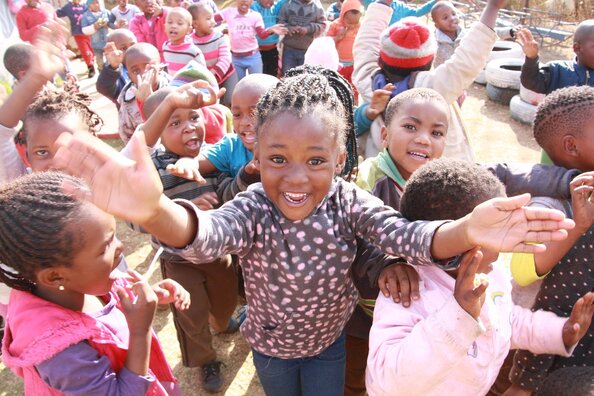
Under the ability to "operate mentally" we will understand a preschool age neoplasm, an integrated characteristic of human consciousness, which is an inseparable unity of imagination, attention, memory and thinking and consists in the ability of an individual to operate in the mental plane with substitutes for real objects (without performing detailed operations with them in space).
...
As it has become clear in recent years, the development of the ability to "operate mentally" and the peculiarities of assimilating social experience are interrelated processes.
...
A preschooler learns social experience primarily through the leading type of activity for this age - play.
...
The success of mastering these learning activities suggests that all children from the first days of school have already developed the ability to "operate mentally" to the necessary extent, but in fact this is not the case.
...
It is proved that the ability to "operate mentally" must be specially “stretched”, and its development is a slow process that involves a long mental education of the child and ends at about twelve years of age.
...
The main attention was paid to didactic games - games whose structural components are: didactic task, game task, game actions, game rules, its content, result and didactic material.
...
Among the favorable conditions for the development of the ability to "operate mentally", researchers distinguish the solution of theoretical problems, modeling, gradual development of the ability to "operate mentally", group work, oral work.
...
As a result, it was concluded that from the content point of view, the “task” form of classes was optimal.
...
Only that social experience can be assimilated by a preschooler that will most affect the sphere of his emotions and feelings.
...
As it has become clear in recent years, the development of the ability to "operate mentally" and the peculiarities of assimilating social experience are interrelated processes.
...
A preschooler learns social experience primarily through the leading type of activity for this age - play.
...
The success of mastering these learning activities suggests that all children from the first days of school have already developed the ability to "operate mentally" to the necessary extent, but in fact this is not the case.
...
It is proved that the ability to "operate mentally" must be specially “stretched”, and its development is a slow process that involves a long mental education of the child and ends at about twelve years of age.
...
The main attention was paid to didactic games - games whose structural components are: didactic task, game task, game actions, game rules, its content, result and didactic material.
...
Among the favorable conditions for the development of the ability to "operate mentally", researchers distinguish the solution of theoretical problems, modeling, gradual development of the ability to "operate mentally", group work, oral work.
...
As a result, it was concluded that from the content point of view, the “task” form of classes was optimal.
...
Only that social experience can be assimilated by a preschooler that will most affect the sphere of his emotions and feelings.
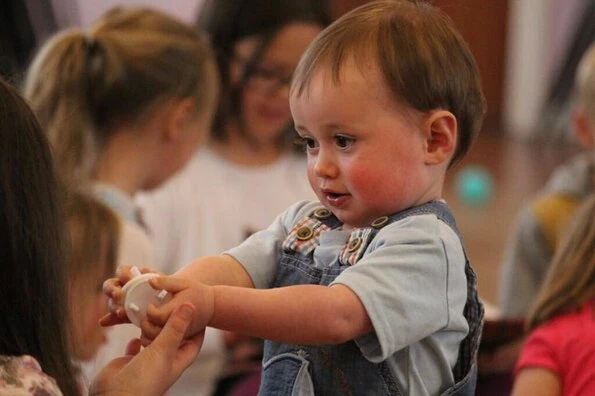
The successful implementation of priority tasks is associated with the transfer of social experience to a new generation, which includes knowledge, ways of doing things, experience of creative activity, and experience of emotional and value-based attitudes towards the world.
...
Research shows that a significant number of children who come to school are characterized by age-related unformed school functions: organization of activity, attention, memory, thinking, and speech.
...
Experts believe that it is necessary not to accelerate the development of preschoolers, but to enrich it, using the leading game activity at this age.
...
At the same time, in recent years, many researchers have noted that preschoolers' play activities are underdeveloped, children play little and are poorly able to obey the rules.
...
One of such important indicators is the ability to "operate mentally", studied by Y.O. Ponomarev.
...
The purpose of his research was to find an answer to the question: does any intellectual ability develop during learning that is not limited to the mere accumulation of knowledge and skills?
...
And the answer was yes, and this is the ability to "operate mentally".
...
This ability was designated as one of the universal characteristics of human consciousness, one of the most important indicators of the overall development of the human psyche, which does not belong to any of the traditionally distinguished mental processes, but is an inseparable unity of imagination, attention, memory and thinking.
...
Chess is one of these tools.
...
In our opinion, chess is of no less value for preschool education, due to the important role it can play in the process of internalization.
...
We are not talking about playing chess as such, where the ability to "operate mentally" is formed spontaneously, but about developing a system of didactic chess tasks designed to develop this ability.
...
At the same time, chess tasks mean tasks using chess material, which makes it possible to use the developmental potential of many other intellectual games.
...
The importance of the problem of purposeful development of the ability to "operate mentally" in preschoolers through the use of chess material and its insufficient development in pedagogical science have determined the relevance of the chosen research topic.
...
Research shows that a significant number of children who come to school are characterized by age-related unformed school functions: organization of activity, attention, memory, thinking, and speech.
...
Experts believe that it is necessary not to accelerate the development of preschoolers, but to enrich it, using the leading game activity at this age.
...
At the same time, in recent years, many researchers have noted that preschoolers' play activities are underdeveloped, children play little and are poorly able to obey the rules.
...
One of such important indicators is the ability to "operate mentally", studied by Y.O. Ponomarev.
...
The purpose of his research was to find an answer to the question: does any intellectual ability develop during learning that is not limited to the mere accumulation of knowledge and skills?
...
And the answer was yes, and this is the ability to "operate mentally".
...
This ability was designated as one of the universal characteristics of human consciousness, one of the most important indicators of the overall development of the human psyche, which does not belong to any of the traditionally distinguished mental processes, but is an inseparable unity of imagination, attention, memory and thinking.
...
Chess is one of these tools.
...
In our opinion, chess is of no less value for preschool education, due to the important role it can play in the process of internalization.
...
We are not talking about playing chess as such, where the ability to "operate mentally" is formed spontaneously, but about developing a system of didactic chess tasks designed to develop this ability.
...
At the same time, chess tasks mean tasks using chess material, which makes it possible to use the developmental potential of many other intellectual games.
...
The importance of the problem of purposeful development of the ability to "operate mentally" in preschoolers through the use of chess material and its insufficient development in pedagogical science have determined the relevance of the chosen research topic.

How to teach chess to children? No books have been written on this topic yet. Meanwhile, children's thinking has its own peculiarities, which the teacher must take into account. In children, concrete thinking prevails over abstract thinking.
...
One of the ways to organize children's attention is to teach them chess notation, requiring them to write down and analyze each game they play.
...
It is especially important to analyze combinations, not only those that occurred in the game, but also those that went unnoticed.
...
This is another example of the care with which abstract concepts should be taught to children. This is not a “star”. This is a reaction to a “flank attack”.
...
Most parents tend to overestimate their children's chess abilities. This is probably also due to the emotions that others experience when they see a child playing an adult.
...
There have been cases where six to eight year olds have been declared chess prodigies.
...
It should be noted that one should not rush to conclusions about the “promise” or “lack of promise” of students.
...
However, children's decisions are subject to their own laws.
...
A game calculated on the opponent's mistake usually consists of bad moves and is justified in sports terms only if the opponent falls into a “trap”. Creatively, it is not justified at all, because because the opponent has “gone down”, the winner's bad moves do not become good ones
...
“If you touch, move” is the immutable law of the novice chess player.
...
It is known that theory and practice are one. A theory that is not based on practice is an empty sound.
...
A special difficulty is caused by showing the basics of the endgame, which seems boring and uninteresting to children.
...
Classes are lively when the endgame under study is played on the demonstration board by two representatives of the training group, who evaluate it differently.
...
One of the ways to organize children's attention is to teach them chess notation, requiring them to write down and analyze each game they play.
...
It is especially important to analyze combinations, not only those that occurred in the game, but also those that went unnoticed.
...
This is another example of the care with which abstract concepts should be taught to children. This is not a “star”. This is a reaction to a “flank attack”.
...
Most parents tend to overestimate their children's chess abilities. This is probably also due to the emotions that others experience when they see a child playing an adult.
...
There have been cases where six to eight year olds have been declared chess prodigies.
...
It should be noted that one should not rush to conclusions about the “promise” or “lack of promise” of students.
...
However, children's decisions are subject to their own laws.
...
A game calculated on the opponent's mistake usually consists of bad moves and is justified in sports terms only if the opponent falls into a “trap”. Creatively, it is not justified at all, because because the opponent has “gone down”, the winner's bad moves do not become good ones
...
“If you touch, move” is the immutable law of the novice chess player.
...
It is known that theory and practice are one. A theory that is not based on practice is an empty sound.
...
A special difficulty is caused by showing the basics of the endgame, which seems boring and uninteresting to children.
...
Classes are lively when the endgame under study is played on the demonstration board by two representatives of the training group, who evaluate it differently.
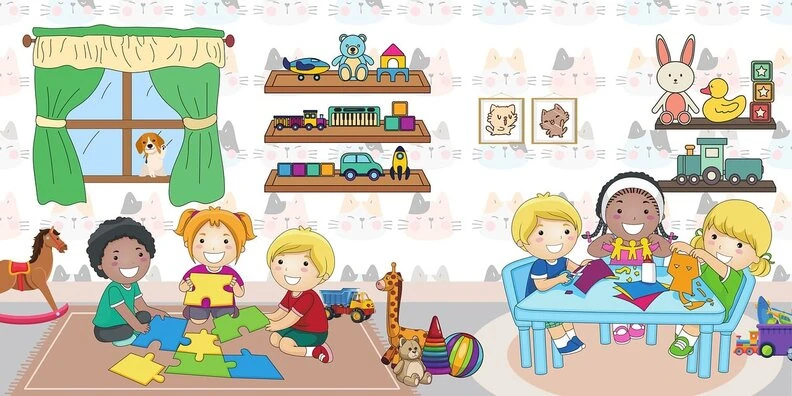
Can preschoolers play chess!
...
First you need to capture
...
How to captivate a child!
...
How to capture!
...
Break time
...
What a benefit to children!
...
The beauty of chess games, combinations and sketches contribute to the education of aesthetic feelings.
...
Chess has not yet received proper recognition in pedagogical science only because its value is not so much in direct, visual results as in more distant ones that are not immediately visible, they are manifested in learning and work.
...
First you need to capture
...
How to captivate a child!
...
How to capture!
...
Break time
...
What a benefit to children!
...
The beauty of chess games, combinations and sketches contribute to the education of aesthetic feelings.
...
Chess has not yet received proper recognition in pedagogical science only because its value is not so much in direct, visual results as in more distant ones that are not immediately visible, they are manifested in learning and work.

First, a brief excursion into epistemology. How does knowledge arise? Its source is the data of the senses.
...
A relevant question is: where is the guarantee that our imagination will give birth to the concept we are looking for, and not some nonsense?
...
Kant saw an active beginning in the intellect, but could not do so with respect to sense cognition.
....
In fact, the philosophical doctrine of unconscious thinking originates from Leibniz.
...
Thinking uncontrolled by the mind attracted Kant's close attention.
...
Human culture, according to Freud, is a system of prohibitions that are layered and complicated in the course of history.
...
Like Pavlov, Einstein highly appreciated the theory of displacement.
...
The study of dreams is one of the ways leading to the analysis of creative imagination.
...
Firstly, a dream strikes with its incoherence, absurdity, and accumulation of absurdities.
...
According to Brecht, the purpose of the dream is to bring out of the “automaticity of perception”, to look at the ordinary with an unusual look, to see something strange, new in it, to make you think, to teach you to think.
...
Finally, the “illusion of correctness,” the desire to clarify, explain the confusion caused by allegory, ambiguity, and a visual representation of an abstract thought.
...
in the West, at the faculties of science and technology, the compulsory curriculum in recent years has increasingly included general humanities and special artistic disciplines, and during competitions for scientific and technical positions in some companies and institutions, the applicant's artistic culture is tested, not just his knowledge, but his ability to interpret works of contemporary art.
...
A relevant question is: where is the guarantee that our imagination will give birth to the concept we are looking for, and not some nonsense?
...
Kant saw an active beginning in the intellect, but could not do so with respect to sense cognition.
....
In fact, the philosophical doctrine of unconscious thinking originates from Leibniz.
...
Thinking uncontrolled by the mind attracted Kant's close attention.
...
Human culture, according to Freud, is a system of prohibitions that are layered and complicated in the course of history.
...
Like Pavlov, Einstein highly appreciated the theory of displacement.
...
The study of dreams is one of the ways leading to the analysis of creative imagination.
...
Firstly, a dream strikes with its incoherence, absurdity, and accumulation of absurdities.
...
According to Brecht, the purpose of the dream is to bring out of the “automaticity of perception”, to look at the ordinary with an unusual look, to see something strange, new in it, to make you think, to teach you to think.
...
Finally, the “illusion of correctness,” the desire to clarify, explain the confusion caused by allegory, ambiguity, and a visual representation of an abstract thought.
...
in the West, at the faculties of science and technology, the compulsory curriculum in recent years has increasingly included general humanities and special artistic disciplines, and during competitions for scientific and technical positions in some companies and institutions, the applicant's artistic culture is tested, not just his knowledge, but his ability to interpret works of contemporary art.

Among the problems that attract the attention of modern heuristics, two are the least developed: the unconscious components of the researcher's psyche and the aesthetic principle in his thinking.
...
The starting point of reasoning is the idea of a number of authors about the four stages of the process of invention (scientific discovery)
...
The work involves a completely different type of thinking, not the usual one, which is associated with a clearly fixed sign system adapted to the needs of communication.
...
To create means to make a choice, rejecting unsuitable options, and the unconscious choice is guided by a sense of scientific beauty
...
A special aesthetic sense is a kind of sieve that lets through what can be true because of its harmony.
...
Creativity is a creation in beauty. In other words, any creative act is inherently aesthetic.
...
Beauty, therefore, is not in knowledge itself, but in its acquisition, in its proof, in the discovery of unity where it could only be assumed.
...
In clarifying the points of contact between the heuristic situation in science and artistic activity, one should also take into account the critically interpreted Kantian definition of beauty as a “game of cognitive abilities.”
...
As for playful behavior, it exists in two forms (competition and imitation), which sometimes merge together.
...
A person seeks to achieve some result consciously “programmed” during the competition, and then surpass it.
...
Even more important for our problem is the second hypostasis of the game - imitation.
...
The pioneer lives in two spheres: the existing one reminds of itself all the time, but the sought-after one is perceived with a due measure of reality.
...
The starting point of reasoning is the idea of a number of authors about the four stages of the process of invention (scientific discovery)
...
The work involves a completely different type of thinking, not the usual one, which is associated with a clearly fixed sign system adapted to the needs of communication.
...
To create means to make a choice, rejecting unsuitable options, and the unconscious choice is guided by a sense of scientific beauty
...
A special aesthetic sense is a kind of sieve that lets through what can be true because of its harmony.
...
Creativity is a creation in beauty. In other words, any creative act is inherently aesthetic.
...
Beauty, therefore, is not in knowledge itself, but in its acquisition, in its proof, in the discovery of unity where it could only be assumed.
...
In clarifying the points of contact between the heuristic situation in science and artistic activity, one should also take into account the critically interpreted Kantian definition of beauty as a “game of cognitive abilities.”
...
As for playful behavior, it exists in two forms (competition and imitation), which sometimes merge together.
...
A person seeks to achieve some result consciously “programmed” during the competition, and then surpass it.
...
Even more important for our problem is the second hypostasis of the game - imitation.
...
The pioneer lives in two spheres: the existing one reminds of itself all the time, but the sought-after one is perceived with a due measure of reality.

I was a third-category chess player when I came up with a fruitful opening idea - the idea of a variation that was to turn the whole of chess theory upside down.
...
It is now called the Latsis attack.
...
All this was already in the game Tarrasch - Marko, Dresden, 1892
...
The theory of the royal gambit is especially full of sound names. Just take the Muzio Gambit alone - what is there not to see here!
...
The Muzio Gambit cannot be played andante, like a Chopin Nocturne; this devilish gambit should be played allegro furioso, like the first movement of a sonata pathetique!
...
Dr. Lasker, who was to foresee my future, to determine my chess destiny, lived in our city at the time.
...
It was then that Lasker was finally convinced that he was looking at a real chess player and asked me if I had any of my own opening developments.
...
Lasker asks me what I think of this position. I answer that Black is in a bad position because he has weakened his queen's side and is behind in development.
...
But I want to give you one little piece of advice. Turn the board around. Look at the position from the other side.
...
Lasker identified the main thing: do I have a purely chess gift? In other words, do I have independent chess thinking?
...
As for the “devil's gambit”, I managed to play the Muzio Gambit in a tournament game only once.
...
It is now called the Latsis attack.
...
All this was already in the game Tarrasch - Marko, Dresden, 1892
...
The theory of the royal gambit is especially full of sound names. Just take the Muzio Gambit alone - what is there not to see here!
...
The Muzio Gambit cannot be played andante, like a Chopin Nocturne; this devilish gambit should be played allegro furioso, like the first movement of a sonata pathetique!
...
Dr. Lasker, who was to foresee my future, to determine my chess destiny, lived in our city at the time.
...
It was then that Lasker was finally convinced that he was looking at a real chess player and asked me if I had any of my own opening developments.
...
Lasker asks me what I think of this position. I answer that Black is in a bad position because he has weakened his queen's side and is behind in development.
...
But I want to give you one little piece of advice. Turn the board around. Look at the position from the other side.
...
Lasker identified the main thing: do I have a purely chess gift? In other words, do I have independent chess thinking?
...
As for the “devil's gambit”, I managed to play the Muzio Gambit in a tournament game only once.
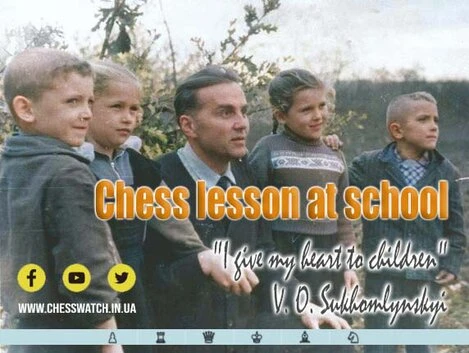
The prominent Ukrainian educator V.O. Sukhomlynskyi (1918-1970) tells about his experience of working at school, about how to introduce children to the world of knowledge, and how to facilitate their mental work.
...
Talking about the education of a culture of thinking, Sukhomlynsky pays serious attention to chess.
...
Chess is a great school of consistent logical thinking.
...
In the organization of chess lessons at school, there is still a lot of artisanalism, and pedagogical science does not generalize the useful experience gained. And it would be worthwhile for educators to listen carefully to the words and assessments of V.O. Sukhomlinsky.
...
We often hear that chess should not be introduced as a compulsory lesson at school. It is said to be uninteresting for many children, it will be a burden to them.
...
The main purpose of the lessons is not to train highly classified chess players. The main thing is to reveal the beauty of chess, to help children develop the useful qualities that familiarity with chess brings. And for those students who want to study the theory more deeply in the future, the first lessons will do a good service.
...
A prerequisite is to combine theory with practice. Organize tournaments in the classroom, let the children play with each other.
...
There are many techniques that help chess players develop certain skills.
...
Organizing chess lessons at school is not as difficult as it may seem at first glance.
...
Talking about the education of a culture of thinking, Sukhomlynsky pays serious attention to chess.
...
Chess is a great school of consistent logical thinking.
...
In the organization of chess lessons at school, there is still a lot of artisanalism, and pedagogical science does not generalize the useful experience gained. And it would be worthwhile for educators to listen carefully to the words and assessments of V.O. Sukhomlinsky.
...
We often hear that chess should not be introduced as a compulsory lesson at school. It is said to be uninteresting for many children, it will be a burden to them.
...
The main purpose of the lessons is not to train highly classified chess players. The main thing is to reveal the beauty of chess, to help children develop the useful qualities that familiarity with chess brings. And for those students who want to study the theory more deeply in the future, the first lessons will do a good service.
...
A prerequisite is to combine theory with practice. Organize tournaments in the classroom, let the children play with each other.
...
There are many techniques that help chess players develop certain skills.
...
Organizing chess lessons at school is not as difficult as it may seem at first glance.