


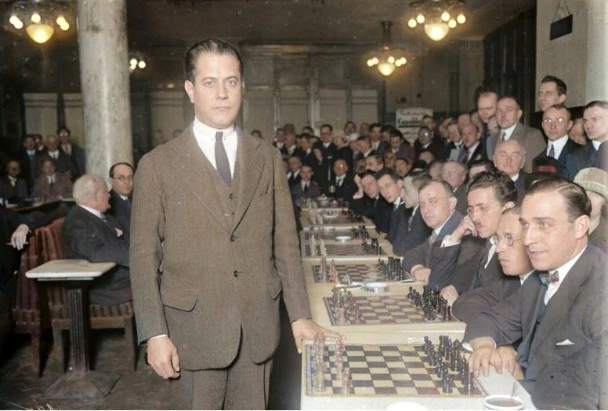
Here are the main conclusions of the analysis:
1. Debut: X. R. Capablanca's highly developed intuition in choosing reliable and practically feasible continuations has been identified...
2.Mittelspiel: It relies mainly on quick intuitive assessment of the situation. This results in speed and ease of play despite a noticeable lack of critical thinking...
3.Endgame: X. R. Capablanca demonstrates noticeably high technical skill in this phase of the game, but he plays relatively weaker...
1. Debut: X. R. Capablanca's highly developed intuition in choosing reliable and practically feasible continuations has been identified...
2.Mittelspiel: It relies mainly on quick intuitive assessment of the situation. This results in speed and ease of play despite a noticeable lack of critical thinking...
3.Endgame: X. R. Capablanca demonstrates noticeably high technical skill in this phase of the game, but he plays relatively weaker...
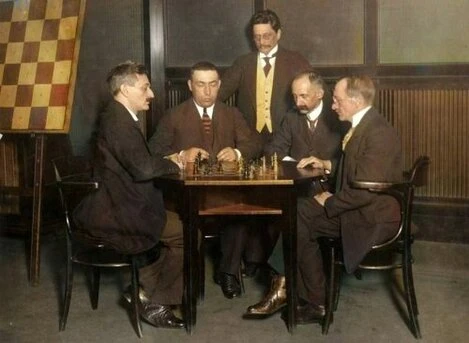
Em. Lasker was the first of the great chess players to realize the importance of studying the personality of opponents in chess.
Em. Lasker repeatedly pointed out that "people fight on chessboards, not wooden pieces".
Em. Lasker repeatedly pointed out that "people fight on chessboards, not wooden pieces".
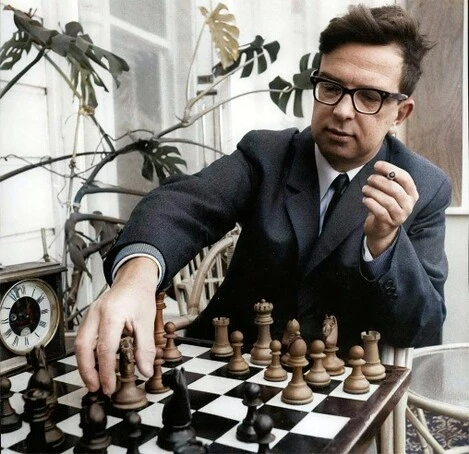
All power is in concentration.
This should be considered the main rule of thinking - focusing attention.
With a conscious, purposeful switching of attention, the combination of perception and imagination in anticipatory images contributes to the development of the creative imagination of chess players.
This property of attention is evident in many games by M. Tal, D. Bronstein, A. Lilienthal, and R. Nezhmetdinov.
This should be considered the main rule of thinking - focusing attention.
With a conscious, purposeful switching of attention, the combination of perception and imagination in anticipatory images contributes to the development of the creative imagination of chess players.
This property of attention is evident in many games by M. Tal, D. Bronstein, A. Lilienthal, and R. Nezhmetdinov.
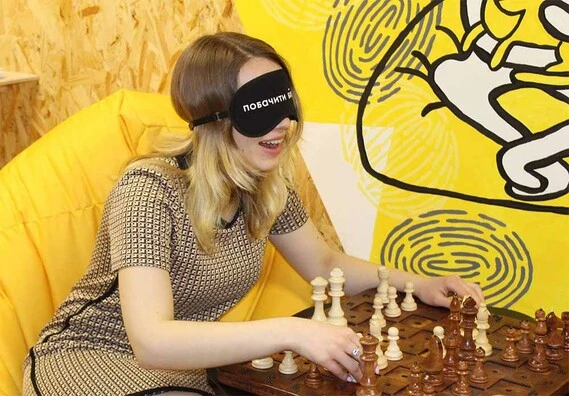
Ф. Duz-Khotimirsky pointed out that playing blindly contributes to the development of combination vision.
...
An empty board greatly facilitates the creation of spatial representations of the struggle in the game, expands the zone of mental focus and helps to better memorize the location of the pieces.
...
An empty board greatly facilitates the creation of spatial representations of the struggle in the game, expands the zone of mental focus and helps to better memorize the location of the pieces.
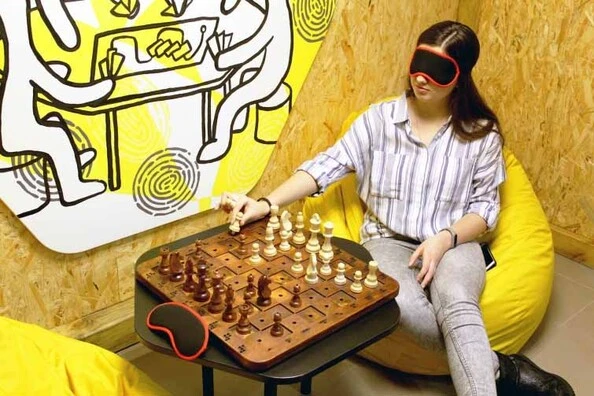
Thus, in different types of chess activities - playing at the board, analyzing and playing blindly - one can notice a common thing - the need to plan future operations "in the mind".
Ф. Duz-Khotimirski rightly noted: "Chess is basically a game of blindness. A chess player operates with pieces in his imagination, conducts combinations and maneuvers that have not yet taken place."
Ф. Duz-Khotimirski rightly noted: "Chess is basically a game of blindness. A chess player operates with pieces in his imagination, conducts combinations and maneuvers that have not yet taken place."