


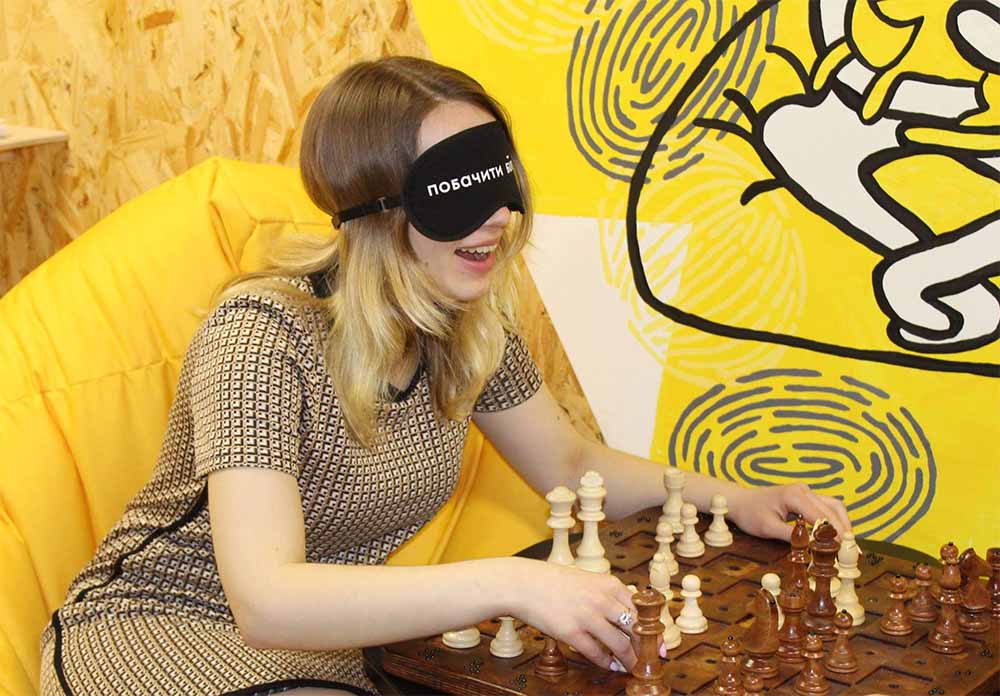
Ф. Duz-Khotimirsky pointed out that playing blindly contributes to the development of combination vision.
...
An empty board greatly facilitates the creation of spatial representations of the struggle in the game, expands the zone of mental focus and helps to better memorize the location of the pieces.
...
An empty board greatly facilitates the creation of spatial representations of the struggle in the game, expands the zone of mental focus and helps to better memorize the location of the pieces.
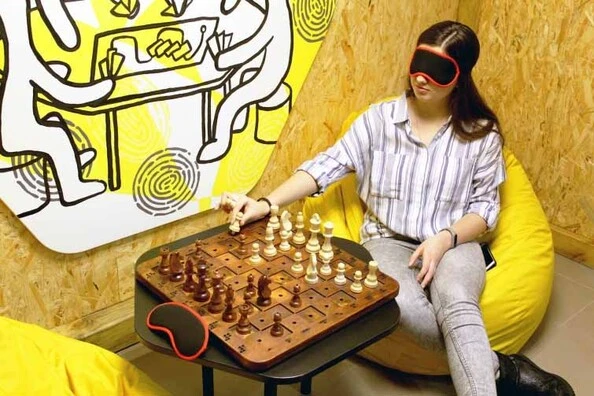
Thus, in different types of chess activities - playing at the board, analyzing and playing blindly - one can notice a common thing - the need to plan future operations "in the mind".
Ф. Duz-Khotimirski rightly noted: "Chess is basically a game of blindness. A chess player operates with pieces in his imagination, conducts combinations and maneuvers that have not yet taken place."
Ф. Duz-Khotimirski rightly noted: "Chess is basically a game of blindness. A chess player operates with pieces in his imagination, conducts combinations and maneuvers that have not yet taken place."
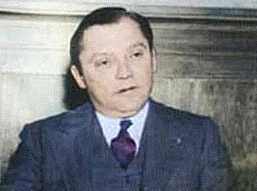
It happens to every chess player that, having calculated the correct option, he cannot decide whether it is profitable or not, which, as far as I can tell from myself, is primarily due to the lack of clarity of the picture that has arisen in his mind. A chess player's thought is connected with visual representations. Therefore, the clearer and more vivid the visual picture, the easier and more accurate the thought works and the richer it is.
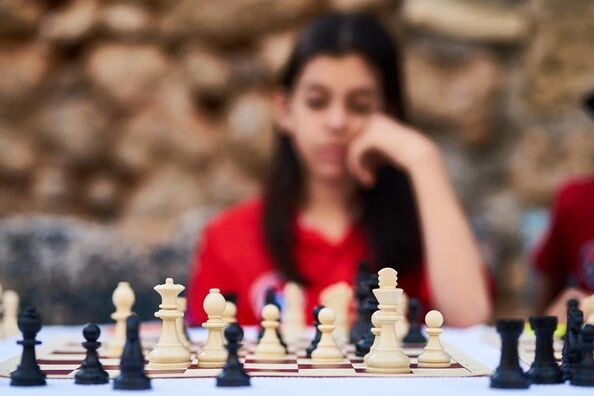
The distinctive feature of another mental operation, "seeing," is that only the final result passes through the center of consciousness. In the "vision" operation, the chess player instantly sees a series of moves united by a common idea, and the intermediate moves occur so quickly that they cannot be passed through the center of consciousness. The role of "vision" in a chess player's thinking is extremely important.
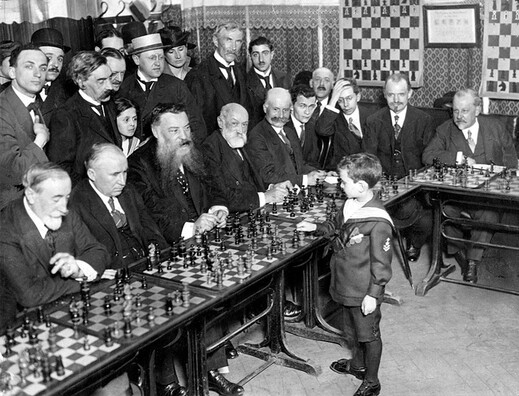
The chess player's thinking is visual, "it is connected with the visual perception of the board, the pieces on the board and the spatial relations between them, as well as with visual representations from previous experience and visual images created by the imagination when thinking about the movement of the pieces in the mind."
With the development of modern technologies, chess is becoming more and more popular every day.
Chess helps to develop concentration, the ability to overcome difficulties, plan your own actions, think logically, etc.
Since chess reveals the qualities of a human personality, it is used as a model for scientific research in psychology and pedagogy.
The system of chess lessons, by identifying and developing individual abilities, forming a progressive personality orientation, contributes to the overall development and education of the younger generation.
Chess helps to develop concentration, the ability to overcome difficulties, plan your own actions, think logically, etc.
Since chess reveals the qualities of a human personality, it is used as a model for scientific research in psychology and pedagogy.
The system of chess lessons, by identifying and developing individual abilities, forming a progressive personality orientation, contributes to the overall development and education of the younger generation.
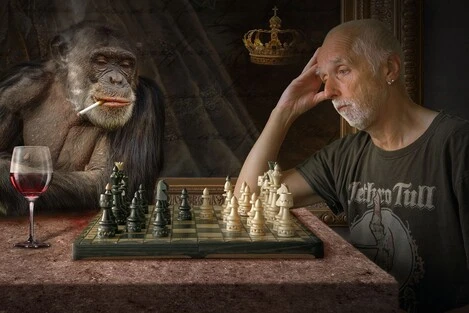
Chess is a game with complete information - there are no accidents, we know the full history of moves at every step, we know all the moves that the other player can make.
Theoretically, we know that there is an equilibrium - it can be a theoretical draw or a win for one side (most likely white), but we cannot calculate it - we lack the resources.
Theoretically, we know that there is an equilibrium - it can be a theoretical draw or a win for one side (most likely white), but we cannot calculate it - we lack the resources.